

“Boost patient satisfaction and streamline operations with conversational AI for clinics. Automate scheduling, FAQs, and 24/7 support.”
The healthcare landscape is changing rapidly, driven by evolving technology and rising patient expectations. Patients today are accustomed to the speed and convenience of digital interactions in every other aspect of their lives, from banking to retail. They now expect that same level of immediacy and personalization from their healthcare providers.
Consequently, clinics are facing immense pressure. Staff members are often overwhelmed by administrative tasks and high call volumes, making it difficult to maintain consistent, prompt communication. This communication gap can lead to patient frustration, missed appointments, and lower satisfaction scores. Fortunately, the integration of conversational AI for clinics is proving to be a game-changer, transforming the patient experience by acting as a responsive digital concierge.
This article will explore how conversational AI is reshaping the patient journey, driving engagement, and boosting clinic reputations.
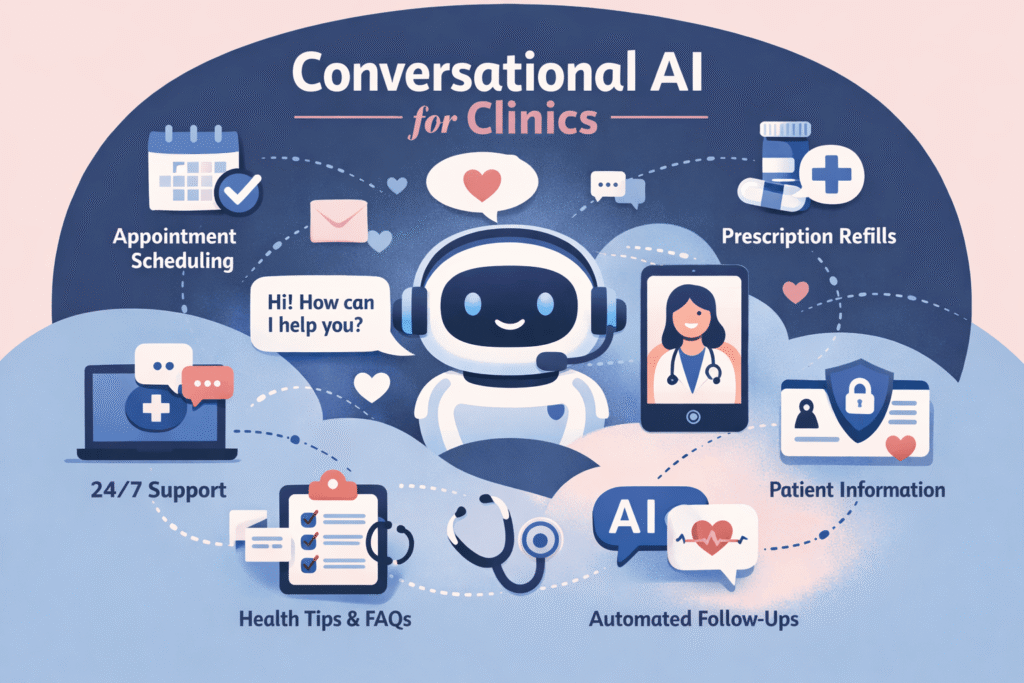
What Exactly Is Conversational AI for Clinics?
Conversational AI refers to technologies, such as healthcare chatbots and AI text messaging systems, that enable computers to understand, process, and respond to human language (spoken or written). This goes far beyond the rigid, pre-programmed menu options of traditional automated phone systems (IVR).
Modern conversational AI uses natural language processing (NLP) to understand the intent behind a patient’s query. This means patients can interact in their own words, via SMS or website chat, and receive accurate, immediate responses. This technology empowers clinics to engage patients effectively and personally, at any hour of the day.
The Digital Patient Journey: Your Dedicated AI Concierge
A patient’s experience with your clinic extends long before and after their actual appointment. Conversational AI acts as a sophisticated digital concierge, guiding patients seamlessly through every stage of this digital patient journey.
Let’s break down how this technology enhances key touchpoints:
1. The Pre-Visit and Intake Experience
The time leading up to an appointment can often be filled with anxiety or simple administrative hurdles for patients. Conversational AI significantly eases this burden.
- 24/7 Availability and Scheduling: When a patient realizes late at night that they need to schedule or reschedule an appointment, they can interact with the clinic’s AI system immediately. The AI can check real-time availability and confirm the booking instantly, avoiding the need for the patient to wait until office hours and make a phone call. This proactive patient engagement improves retention.
- Handling FAQs Instantly: “What are your office hours?” “Where is the clinic located?” “What insurance do you accept?” These routine questions frequently clog up phone lines. A well-designed conversational AI interface can answer these questions instantly.
- Sending Crucial Pre-Op and Pre-Appointment Instructions: AI text messaging ensures patients receive and actually see them. For example, if a patient is undergoing a procedure that requires fasting, the AI concierge can send automated, timely reminders (“Please remember: do not eat or drink anything after midnight tonight for your appointment tomorrow”). This automated delivery prevents procedural delays and ensures patients are properly prepared, reducing both cancellations and clinical risk.
- Streamlining Intake and Insurance Queries: Conversational AI can guide patients through pre-intake forms or help verify insurance coverage before they even set foot in the clinic. If a patient has a complex insurance query, the AI can gather initial details and seamlessly triage it to the appropriate human staff member.
The flowchart above illustrates the points across the entire patient journey at which conversational AI can intervene, from the initial discovery of the clinic to long-term post-care follow-up.
2. Managing the Visit
Even during the actual clinic visit, conversational AI provides valuable support:
- Virtual Check-In and Waitlist Management: Instead of sitting in a crowded waiting room, patients can “check in” via a text message and receive updates on wait times, allowing them to wait more comfortably, perhaps in their vehicle. The AI system can automatically notify the next patient on the list when a provider is ready, optimizing clinic flow.
- Internal Navigation: In larger facilities, navigating the building can be confusing. Conversational AI can provide step-by-step directions directly to the correct department or clinic room.
3. Post-Care Follow-Up and Recovery Support
Patient care shouldn’t stop when they leave the clinic. Robust follow-up is critical for patient retention and improved health outcomes, and this is where automated follow-up shines.
- Delivering Post-Care Instructions: Understanding how to care for a wound, take new medications, or recognize complications can be overwhelming immediately following treatment. Conversational AI can send clear, concise post-care instructions via text for patients to reference as needed.
- Proactive Check-Ins: An automated check-in message (“Hello, it’s been two days since your treatment. How are you feeling?”) makes patients feel cared for and valued. If a patient reports significant pain or concern, the AI system can instantly flag this for immediate clinical intervention.
4. Driving Reputation and Retention
The culmination of these streamlined interactions is a stronger, more positive relationship between the patient and the clinic, which is fundamental for effective clinic reputation management.
- Gathering Instant Feedback (HCAHPS/CSAT): A positive experience leads to higher patient satisfaction scores. Conversational AI can automatically trigger satisfaction surveys (such as CSAT or HCAHPS questions) via text shortly after an appointment, while the experience is still fresh.
- Encouraging Reviews: The system can also be programmed to encourage satisfied patients to leave positive online reviews proactively. Proactive outreach significantly boosts the clinic’s digital reputation, making it more attractive to new patients researching providers. Proactive reputation management is crucial in a competitive landscape.
The Clear Link Between Immediate Responsiveness and Higher Patient Satisfaction
The core benefit of conversational AI for clinics lies in immediate digital responsiveness. Patients value their time and seek frictionless interactions. In an age when information is available instantly, waiting on hold for 15 minutes to ask a simple question feels outdated and frustrating.
By providing instant, accurate answers and personalized guidance 24/7, clinics demonstrate that they respect their patients’ time and prioritize their convenience. This creates a powerful, personalized healthcare experience that fosters trust and loyalty.
Higher patient satisfaction scores and improved patient retention strategies are natural results of this proactive approach to communication. A patient who feels supported throughout their digital patient journey—from scheduling to recovery—is far more likely to remain loyal to that clinic and recommend it to others.
Supporting Telemedicine with Conversational AI
The rapid expansion of telemedicine support has introduced new challenges in coordinating remote care. Conversational AI plays a vital role in supporting telehealth services by:
- Scheduling and Pre-Appointment Tech Checks: The AI concierge can automatically schedule telemedicine appointments, send the virtual link, and even walk patients through a simple technology check to ensure they are prepared for the call, reducing technical difficulties during the visit.
- Gathering Triage Data: Before the telehealth visit begins, the conversational AI can ask patients to input their symptoms or concerns, providing the clinician with structured data before the call starts, thereby maximizing the limited time of the virtual visit.
Beyond the Patient: Operational Efficiency
While the focus here is on the patient experience, the operational benefits for clinics are substantial. By handling high-volume, routine interactions, conversational AI significantly reduces the administrative workload on clinic staff. This frees up human personnel to focus on more complex, high-touch patient interactions that truly require human empathy and critical thinking, further enhancing overall clinic efficiency and staff satisfaction.
Building the Future of Patient Care with InvigoMedia
Transitioning your clinic to a patient-centric, digitally advanced model requires expert guidance. InvigoMedia is a specialized marketing agency that understands the intricate nuances of the healthcare sector. We possess an extensive track record of success in helping clinics build trust, improve patient relationships, and optimize their entire digital footprint.
We do more than just provide technology; we build custom conversational flows tailored specifically to your clinic’s unique patient population and workflows. Whether it’s managing post-care follow-ups, proactively managing your clinic’s online reputation, or optimizing pre-op communication, our strategic approach ensures every interaction nurtures the patient relationship and strengthens trust.
By partnering with InvigoMedia, you can harness the full power of conversational AI for clinics to enhance every facet of the patient experience. Don’t let your clinic fall behind in an increasingly competitive market. Focus on what you do best—providing exceptional clinical care—and let us handle the technology that supports that mission.
Contact InvigoMedia today to learn how we can help you build custom conversational flows that drive patient retention, boost satisfaction scores, and secure your clinic’s reputation as a leader in patient-centered care.
FAQs About Conversational AI for Clinics
Q: Is conversational AI HIPAA compliant?
A: Yes, conversational AI solutions designed specifically for healthcare are built to be HIPAA compliant, utilizing secure messaging protocols and data encryption to protect patient privacy.
Q: Does this mean patients will never talk to a human again?
A: Absolutely not. Conversational AI is intended to augment, not replace, human staff. The technology handles routine tasks and common questions, but it is designed with seamless escalation capabilities. Complex medical issues, emotional situations, and unique patient requests will always require the expertise of human clinicians and administrative professionals.
Q: Can conversational AI give medical advice?
A: No, it should not give diagnoses or specific medical advice. Conversational AI is a triage and informational tool. It can provide general information in line with clinic protocols or guide patients to the appropriate resource, such as scheduling a clinical consultation or directing them to emergency care.
Q: How difficult is it to implement conversational AI?
A: Modern, cloud-based conversational AI platforms are designed for relatively straightforward integration with existing electronic health records (EHR) and clinic management systems.