

“Target the high-demand hair restoration market. Learn the best strategies for promoting PRP hair treatment to boost clinic revenue.”
Hair loss is not just a cosmetic issue. It is a deeply personal crisis. For many, a thinning scalp signals the loss of youth, health, and confidence. This emotional weight drives a multi-billion-dollar industry. If you run an aesthetic clinic, you know the demand is there. However, the competition is fierce. To win, you must master the art of promoting PRP hair treatment.
Platelet-Rich Plasma (PRP) therapy has changed the game. It offers a bridge between over-the-counter foams that often fail and invasive hair transplant surgeries that many fear. But simply offering the service isn’t enough. You need a strategy that speaks to the specific fears of men and the unique anxieties of women. You need a marketing engine that converts “just looking” into “booked and paid.”
This guide explores how to build that engine. We will examine the science, psychology, and the specific digital marketing tactics required to dominate the hair restoration market.
The Science Behind the Success: Why PRP Works
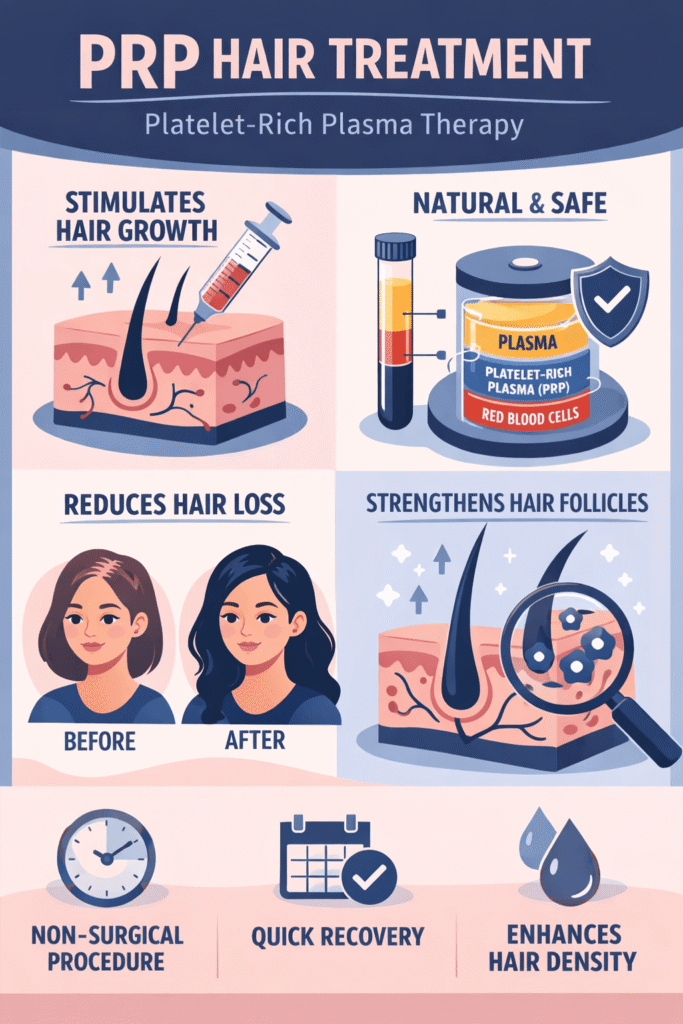
Before you sell it, you must understand it. PRP is regenerative medicine. It uses the patient’s own blood to heal their body. When you explain this to a patient, you remove the fear of “chemicals” or “foreign substances.”
The Biological Mechanism
The process starts with a simple blood draw. You place the blood in a centrifuge. This machine spins blood at high speed to separate its components. You are looking for the “liquid gold”—the platelets.
Platelets do more than just clot blood. They contain growth factors. These growth factors act like messengers. When you inject them into the scalp, they wake up dormant hair follicles. They increase blood flow to the hair bulb. This extends the growth phase (anagen) of the hair cycle. The result? Thicker, stronger, and more numerous hair strands.
The Power of Growth Factors
Explain growth factors to your patients in simple terms. Mention Platelet-Derived Growth Factor (PDGF) and Vascular Endothelial Growth Factor (VEGF). These sound technical but impressive. They show the patient that this is a medical procedure rooted in biology, not a “miracle cure” sold on a late-night infomercial.
By focusing on the science, you build trust. Trust is the primary currency in medical aesthetics.
The Business Case: Adding PRP to Your Revenue Streams
Why should your clinic focus on promoting PRP hair treatment? The answer is simple: high margins and high retention.
Low Overhead, High Value
PRP does not require expensive lasers or massive surgical suites. You need a centrifuge, kits, and a skilled injector. Once you cover the initial cost of the centrifuge, your per-patient cost is relatively low. This makes it one of the most profitable revenue streams for aesthetic clinics.
The Subscription Model
Hair restoration is rarely a one-and-done deal. Most patients need a series of 3 to 4 treatments to achieve significant results. After that, they need maintenance sessions every six to twelve months.
This creates a “recurring revenue” model. You aren’t just selling a service; you are building a long-term relationship. Every new patient has a high lifetime value (LTV). When you calculate your marketing spend, focus on this LTV rather than the profit from a single session.
Marketing to Men: Addressing the “Silent” Crisis
Men often suffer in silence when it comes to hair loss. They check the mirror every morning, worrying about their receding hairline or thinning crown. But they are often hesitant to seek help. They don’t want to look “vain” or admit they are aging.
Emotional Triggers for Men
When promoting PRP hair treatment to men, focus on these three triggers:
- Professional Edge: In a competitive job market, men want to look energetic and young. Hair loss can make them feel like they are “past their prime.” Use ads featuring confident men in professional settings.
- Virility and Strength: Hair is often tied to masculinity. Thinning hair feels like a loss of power. Your messaging should be strong and direct. Avoid overly “flowery” language.
- The “No-Surgery” Factor: Many men fear the “doll hair” look of old-fashioned transplants. They also fear the downtime of surgery. Position PRP as a “lunchtime procedure.” No scars. No stitches. No one needs to know they had it done.
Ad Copy That Works for Men
Keep your headlines short. Use transactional words.
- “Stop the Recession. Keep Your Hair.”
- “Non-Surgical Hair Restoration for Busy Professionals.”
- “Strengthen Your Hair with Your Own Cells. Book Now.”
Marketing to Women: Empathy and Aesthetics
Female hair loss is a different beast entirely. Society expects men to go bald eventually. For women, hair loss is often viewed as a “medical failure” or a loss of femininity. The emotional stakes are incredibly high.
Emotional Triggers for Women
Women don’t usually go bald in a pattern like men. They experience “diffuse thinning.” Their part gets wider. Their ponytail feels thinner. This is what you must address.
- Confidence in Every Setting: Women worry about how they look under bright lights or in the wind. They worry about the “see-through” scalp look.
- A Natural Approach: Women are often more cautious about chemicals. They love the idea that PRP uses their own blood. It feels “clean” and “natural.”
- Restoring the “Crown”: Focus on its beauty. Use imagery that shows healthy, voluminous hair. Talk about the ability to style hair again without hiding thin spots.
Ad Copy That Works for Women
Women respond to empathy and detailed information. They want to know you understand their pain.
- “Rediscover Thick, Full Hair. The Natural Way.”
- “Is a Widening Part Making You Lose Confidence? We Can Help.”
- “Non-Surgical Solutions for Female Hair Thinning. View Results.”
Positioning PRP: The Natural, Non-Surgical Alternative
In the world of selling hair loss treatments, you have to position your product against two giants: Rogaine/Propecia and Hair Transplants.
PRP vs. Topicals and Pills
Many patients are tired of applying sticky foams every night. They are worried about the side effects of pills like Finasteride. Position PRP as the “set it and forget it” solution. It is more effective than topicals because it goes directly to the root of the follicle. It has zero systemic side effects because it is autologous.
PRP vs. Surgery
Hair transplants are expensive. They require a long recovery. They leave scars. PRP is the perfect middle ground. Use the term “Non-surgical hair replacement ads” to catch the attention of those who aren’t ready for the knife. Highlight the fact that there is zero downtime. Patients can go back to work the same day.
Digital Marketing: Regenerative Medicine SEO
To get patients, you need to be found. This is where regenerative medicine SEO comes in. When someone searches for “how to fix thinning hair,” you want your clinic at the top.
Target Long-Tail Keywords
Don’t just try to rank for “hair loss.” That is too broad. Target specific, high-intent phrases like:
- “PRP hair restoration near me”
- “Best non-surgical hair treatment in [Your City]”
- “Cost of PRP for hair loss”
- “Success rate of PRP for women”
Create Educational Content
Google loves content that answers questions. Write blog posts that explain the procedure in detail.
- “What to expect during your first PRP session.”
- “How long does it take to see PRP hair results?”
- “PRP vs. Hair Transplant: Which is right for you?”
This builds authority. When a patient sees your detailed blog, they view you as an expert. This makes them much more likely to book a consultation.
PPC Mastery: Hair Clinic Lead Gen
SEO takes time. If you want leads tomorrow, you need Pay-Per-Click (PPC) advertising. Hair clinic lead gen through Google Ads is highly effective because it targets people actively looking for a solution.
The Power of Search Intent
When someone types “PRP hair treatment cost” into Google, they are close to making a purchase. Your ad should be right there.
- Use Negative Keywords: Don’t waste money on people looking for “at-home PRP kits” or “hair loss shampoos.” Exclude these terms.
- Location Targeting: Show ads only to people within driving distance of your clinic.
- High-Converting Landing Pages: Never send an ad click to your homepage. Send them to a dedicated landing page about PRP. This page should have a clear phone number and a simple booking form.
Retargeting: The Secret Sauce
Most people don’t book on the first visit. They need to see your brand five or six times. Use retargeting ads. If someone visits your PRP page, show them an ad on Facebook or Instagram the next day. Offer them a “Free Hair Density Consultation.” This keeps your clinic top-of-mind.
Content Marketing: Telling the Story
Promoting medical aesthetics is about storytelling. You aren’t selling a medical procedure; you are selling a transformation.
Before and After Photos
Nothing sells hair restoration like visual proof. High-quality, consistent “Before and After” photos are your most valuable marketing asset.
- Ensure the lighting is identical in both photos.
- Use the same angles.
- Get the patient’s permission to use their photos on social media and your website.
Video Testimonials
A photo is great, but a video of a patient talking about their newfound confidence is better. Have them describe how they felt before the treatment and how they feel now. This creates an emotional connection with the viewer.
Social Media Presence
Instagram and TikTok are visual platforms. Show clips of the centrifuge spinning. Show the numbing process (to prove it’s painless). Show your staff’s expertise. This “behind the scenes” content demystifies the process and makes your clinic feel approachable.
Managing Expectations: The Key to Patient Satisfaction
One of the biggest mistakes in promoting PRP hair treatment is over-promising. PRP does not work for everyone. If a man is completely bald with a shiny scalp, PRP won’t restore his hair. The follicles are dead.
The Consultative Approach
During the consultation, be honest.
- Tell them that PRP is best for “thinning,” not “baldness.”
- Explain that results take time. They won’t see a change for three to six months.
- Stress the importance of the full treatment protocol.
When you manage expectations, you get happy patients. Happy patients leave five-star reviews. Five-star reviews bring in more patients.
Handling Objections in the Sales Process
When you’re selling hair loss treatments, you’ll hear the same three objections: price, pain, and “does it really work?”
The Price Objection
PRP is an investment. Instead of apologizing for the price, explain the value.
- “Think of this as an investment in your confidence for the next decade.”
- Compare the cost to a hair transplant ($15,000+) or the lifetime cost of expensive hair systems and wigs.
- Offer financing options like CareCredit.
The Pain Objection
Many people are afraid of needles.
- Explain that you use a very fine needle.
- Mention that you use numbing cream or a cooling device.
- Describe the sensation as a “light pinch.”
The “Does it Work?” Objection
This is where you lean on the science and your social proof.
- “Our clinic has an 80% success rate for patients who follow the full protocol.”
- Show them the clinical studies that prove PRP’s effectiveness.
The Role of the Front Desk
Your marketing can be perfect, but if your front desk staff is poorly trained, you will lose money. Every phone call is a potential thousand dollars in revenue.
Training for Lead Conversion
Your staff should be able to answer basic questions about PRP. They shouldn’t just give out the price and hang up. They should be trained to:
- Acknowledge the Emotion: “I understand how frustrating thinning hair can be.”
- Focus on the Consultation: “The best way to see if you’re a candidate is to come in for a quick look.”
- Create Urgency: “We only have two consultation spots left this week.”
Building an Ecosystem of Services
PRP works best when combined with other treatments. This is how you maximize aesthetic clinic revenue streams.
The Multi-Pronged Approach
Sell PRP as part of a “Total Hair Restoration” package. This might include:
- Low-Level Laser Therapy (LLLT): Patients can use a laser cap at home between sessions.
- Medical-Grade Supplements: Sell high-quality vitamins like Viviscal or Nutrafol in your office.
- Specialized Shampoos: Provide DHT-blocking shampoos to protect the new growth.
When you offer a complete solution, you become the only source the patient needs. This makes it much harder for them to go to a competitor.
The Importance of Follow-Ups
The sale doesn’t end when the patient pays for their package. You must keep them engaged.
Nurturing the Relationship
- Week 1: Call to see how their scalp feels.
- Month 1: Send an email explaining what is happening at the cellular level (even if they can’t see it yet).
- Month 3: Bring them in for “progress photos.”
When patients feel cared for, they stay compliant. Compliance leads to results.
Tracking Your ROI
You cannot manage what you do not measure. Use a CRM to track where every lead comes from.
- Did they find you on Google?
- Did they click a Facebook ad?
- Did a friend refer them?
Track your “Cost Per Lead” and your “Cost Per Acquisition.” This lets you allocate your marketing budget to the channels that actually grow your bank account.
Leveraging Local SEO
Most hair loss patients want a clinic nearby. They don’t want to fly across the country for a 30-minute injection.
Google Business Profile
Optimize your Google Business Profile.
- Post photos of your clinic.
- Ask every PRP patient for a review.
- Answer the “Questions and Answers” section on your profile.
When you dominate local search, you get the most qualified leads for free.
Why Video Marketing is Essential
People buy from people they trust. Video is the fastest way to build that trust.
Educational Videos
Create a YouTube channel or use Instagram Reels to explain the procedure.
- “Watch us prep a PRP treatment.”
- “3 things to avoid after your PRP session.”
- “Why do we use a high-concentration centrifuge?”
When you show your face and your expertise, the patient feels like they already know you before they walk in the door.
The Future of Regenerative Medicine
PRP is just the beginning. The field of regenerative medicine is growing. Exosomes are the next big thing. By establishing your clinic as a leader in promoting PRP hair treatment now, you position yourself to adopt new technologies as they arrive. You become the go-to expert for hair restoration in your region.
The Final Step: Partnering for Growth
You are a medicine expert. You shouldn’t have to be an expert in digital algorithms, too. Building a constant stream of high-value patients requires a specialized approach.
InvigoMedia is the authority in restorative medicine marketing. We don’t just “run ads.” We build systems that connect your practice with the men and women actively seeking hair restoration right now.
We understand the nuances of regenerative medicine SEO. We know how to craft non-surgical hair replacement ads that convert. Our specialized PPC and content marketing services are designed to maximize your clinic’s revenue and build your reputation as the top provider in your area.
Stop guessing with your marketing budget. Start growing with a partner who understands your industry.
Frequently Asked Questions (FAQs)
1. Is PRP hair treatment painful?
Most patients describe the feeling as a series of small pinches. We use a topical numbing cream to ensure the process is as comfortable as possible. The actual injections only take about 10 to 15 minutes.
2. How many sessions are usually needed?
For the best results, we typically recommend a “loading phase” of three sessions, spaced about four to six weeks apart. After that, a maintenance session every six months helps keep the follicles active.
3. How soon will I see results?
Hair grows slowly. Most patients notice a decrease in shedding within a few weeks. New growth and increased thickness usually become visible after the third or fourth month.
4. Are there any side effects?
Since PRP uses your own blood, there is no risk of an allergic reaction or “rejection.” You might experience some mild swelling or redness at the injection site for 24 hours, but that is it.
5. Can PRP fix a completely bald spot?
PRP works by stimulating existing follicles. If a scalp is completely smooth and bald, it usually means the follicles are no longer viable. In those cases, we may discuss other options. PRP is most effective for thinning hair.
6. Is there any downtime after the procedure?
None at all. You can drive yourself home and return to your normal routine immediately. We only ask that you wait 24 hours before washing your hair or doing intense exercise.
7. Does PRP work for women?
Absolutely. In fact, women often see some of the most dramatic results with PRP because their hair loss is typically diffuse thinning, which responds very well to growth factors.
8. How much does PRP hair treatment cost?
Cost varies depending on the number of sessions in your package. While it is more expensive than over-the-counter products, it is significantly more affordable than hair transplant surgery. We offer payment plans to make it accessible.