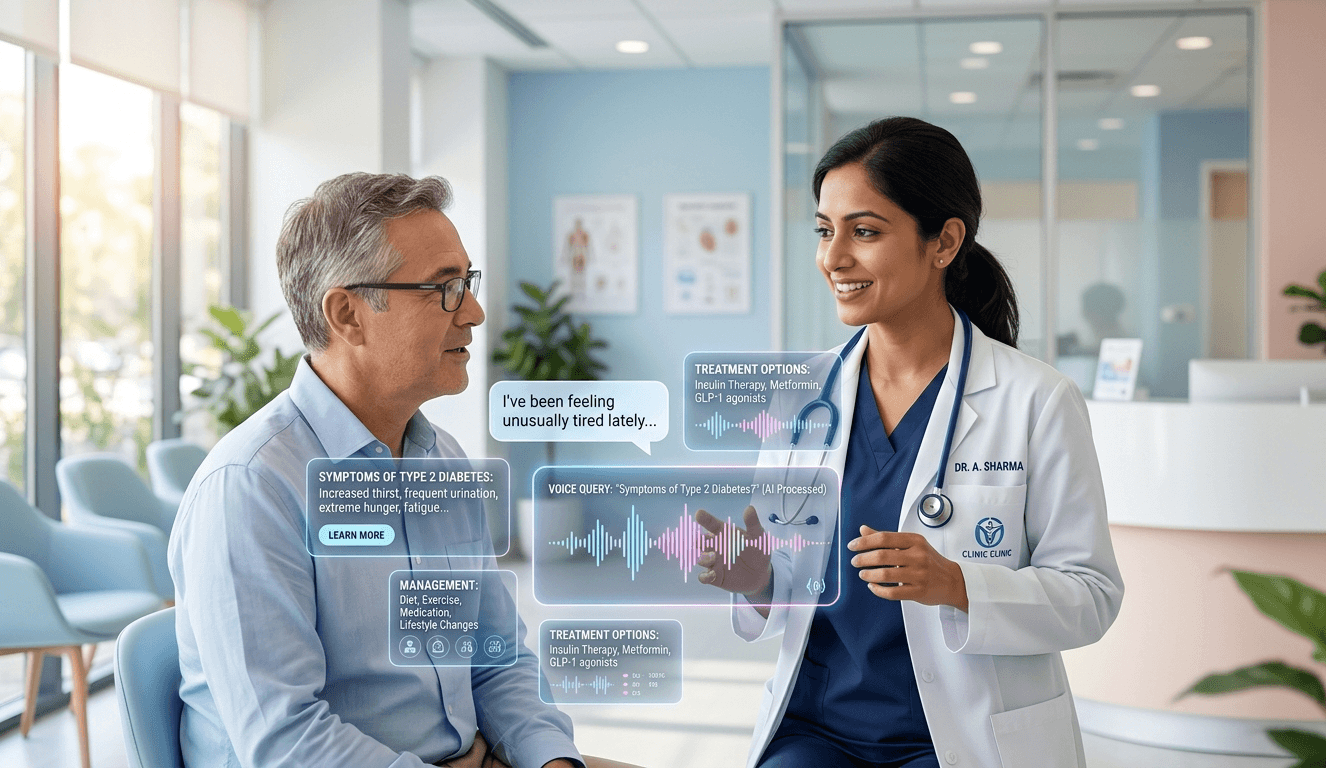

“Master the art of Using Webinars for Patient Acquisition to build trust, educate your audience, and fill your appointment book at scale.”
The healthcare landscape has shifted. Patients are no longer just walking into the nearest clinic. They are researching. They are reading reviews. Most importantly, they are looking for answers to their problems before they ever pick up the phone.
This behavior change offers a massive opportunity for your medical practice. You have the expertise. You have the answers. The missing link is often the medium.
This is where using webinars for patient acquisition changes the game.
A webinar isn’t just a digital lecture. It is a bridge. It connects your clinical knowledge directly to the people who need it most, all from the comfort of their homes. It builds authority. It fosters trust. And when done right, it turns curious attendees into loyal patients.
But hosting a webinar can feel daunting. You might worry about the technology. You might fear that no one will show up. You might worry about sounding too “salesy” and losing credibility.
This guide covers everything. We will walk through the entire process, from picking a topic that hooks your audience to the crucial follow-up sequence that fills your appointment book.
Why Webinars Win in Healthcare Marketing
Let’s look at the facts. Healthcare is personal. It is high-stakes. People do not buy medical procedures like they buy shoes. They need to trust the provider.
Video is the most powerful tool for building that trust at scale. Healthcare video marketing allows potential patients to see your face, hear your voice, and understand your philosophy.
A webinar takes this a step further. It is interactive. It is live. It allows for real-time connection.
Here is why webinars work better than almost any other marketing channel for high-value medical services:
- High Intent: Someone who registers for a 45-minute talk on “solving knee pain” is not a cold lead. They are experiencing a problem and actively seeking a solution.
- Scalability: You can speak to 50, 100, or 500 potential patients at once. Having those initial educational conversations one-on-one would take weeks of your time.
- Positioning: You stop being just another doctor in a directory. You become the educator. You become the expert who cares enough to teach them.
- Pre-Qualification: By the time a webinar attendee books a consult, they know who you are. They know your methods. They are ready to move forward.
Phase 1: Strategy and Topic Selection
Most webinars fail before they start. They fail because the topic is boring or too broad.
You cannot just host a webinar on “Heart Health.” That is too vague. You need to solve a specific problem. You need to target a particular point of pain.
Identifying Patient Pain Points
Think about the questions you answer every single day.
- What keeps your patients up at night?
- What myths do you constantly have to bust?
- What are they scared of regarding treatment?
Medical webinar topics should address these fears directly.
Examples of converting topics:
- Instead of “Dental Implants 101”: “Why Your Dentures Don’t Fit (And How All-on-4 Implants Can Change Your Life in One Day)”
- Instead of “About Knee Surgery”: “Avoiding Knee Replacement: Modern Regenerative Options for Active Adults”
- Instead of “Fertility Treatments”: “Navigating IVF: A Step-by-Step Roadmap for Couples Over 35”
Notice the specificity. These titles call out the audience (active adults, couples over 35). They promise a result. They hit a pain point (ill-fitting dentures, avoiding surgery).
Defining Your Avatar
You cannot speak to everyone. If you try to appeal to everyone, you appeal to no one.
Who is your ideal patient?
- Are they busy professionals? Host your webinar at 7 PM or during lunch hours.
- Are they retirees? Mid-morning might work best.
- Are they new moms? Nap time is your window.
Understanding your audience’s demographics and psychographics dictates your tone, timing, and content.
Phase 2: The Tech Stack (Keep It Simple)
You are a doctor, not an IT specialist. You do not need a television studio to run a successful event; however, quality matters. If your video is grainy or your audio crackles, it reflects poorly on your practice.
The Platform
There are dozens of webinar platforms. For healthcare digital marketing, you need reliability and ease of use.
- Zoom Webinar: The industry standard. Most patients already know how to use it. It is stable and offers good recording quality.
- WebinarJam: Great for marketing features. It has excellent registration pages and offers pop-ups, but the interface can be clunky for some users.
- Demio: A modern, browser-based option. No downloads required for attendees, which increases attendance rates.
A Note on HIPAA: If you are discussing general education, standard platforms are usually fine. However, if you plan to answer specific patient questions or discuss case studies in which a patient might be identifiable, ensure your platform and processes are HIPAA-compliant. Always consult your compliance officer.
The Hardware
Do not use your laptop webcam. The angle is usually unflattering, and the quality is low.
- Webcam: Get an external HD webcam (like a Logitech Brio). Place it at eye level. You want to look the patient in the eye, not look down at them.
- Audio: This is more important than video. People will tolerate bad video, but they will leave if the audio is bad. Buy a simple USB microphone (like a Blue Yeti or a lapel mic).
- Lighting: Face a window if possible. If you are doing this at night, get a simple ring light. Place it behind your camera, slightly above eye level.
Phase 3: The “No-Sell” Content Structure
This is the hardest part for many physicians. How do you structure the talk? You don’t want to sound like a salesperson, but you do want to generate appointments.
The secret is patient education strategies that lead naturally to the next step. You aren’t selling surgery; you are selling the consultation.
Here is a proven 45-minute structure for medical practice growth:
1. The Hook (5 Minutes)
Start strong. Do not wait five minutes for people to “trickle in.” Reward the people who showed up on time.
- Welcome them.
- State the promise: “By the end of this hour, you will understand exactly why your back pain keeps returning and the three non-surgical ways we treat it.”
- Share a quick “Why I do this” story. Humanize yourself.
2. The Problem and Agitation (10 Minutes)
Validate their struggle. Show them you understand what they are going through.
- “You’ve probably tried medication. You’ve probably tried physical therapy that didn’t work. You’re frustrated because you can’t play golf anymore.”
- Explain why the old solutions failed. This builds massive trust. It tells them, “It’s not your fault you haven’t healed yet; you just didn’t have the right information.”
3. The Education / Solution (20 Minutes)
This is the meat of the presentation. Teach them.
- Break down the condition simply. Use analogies.
- Show diagrams or X-rays (anonymized).
- Present your methodology. How do you approach this problem differently?
- Case Studies: This is vital. Show a “Before and After.” Tell the story of a patient who was in their shoes and is now better. Stories sell healthcare better than data.
4. The Transition (5 Minutes)
Now, you pivot.
- “We have covered a lot today. You now know there are options.”
- “But every patient is unique. I cannot diagnose you over a webinar.”
5. The Offer (5 Minutes)
This is not a hard sell. It is an invitation.
- “If you want to see if this treatment is right for you, I invite you to a discovery call / initial consultation.”
- Create Urgency: “I have opened up 10 slots on my calendar this week specifically for webinar attendees.”
- Remove Risk: If you offer a free screening or a discounted initial exam, mention it here.
6. Q&A (Remaining Time)
Stay until the questions are answered. The people asking questions are your hottest leads.
Phase 4: Promotion Tactics
You can have the best presentation in the world, but it means nothing if the room is empty. You need webinar promotion tactics that cut through the noise.
Email Marketing
Your existing database is your biggest asset.
- Email 1 (2 weeks out): The Announcement. “We are hosting a special event about [Topic].”
- Email 2 (1 week out): The Problem. Focus on the pain point. “Tired of living with [Condition]?”
- Email 3 (3 days out): Social Proof. Share a testimonial related to the topic.
- Email 4 (Morning of): The Reminder. “We start in 6 hours.”
- Email 5 (1 hour before): The Link. “Grab your seat.”
Paid Advertising
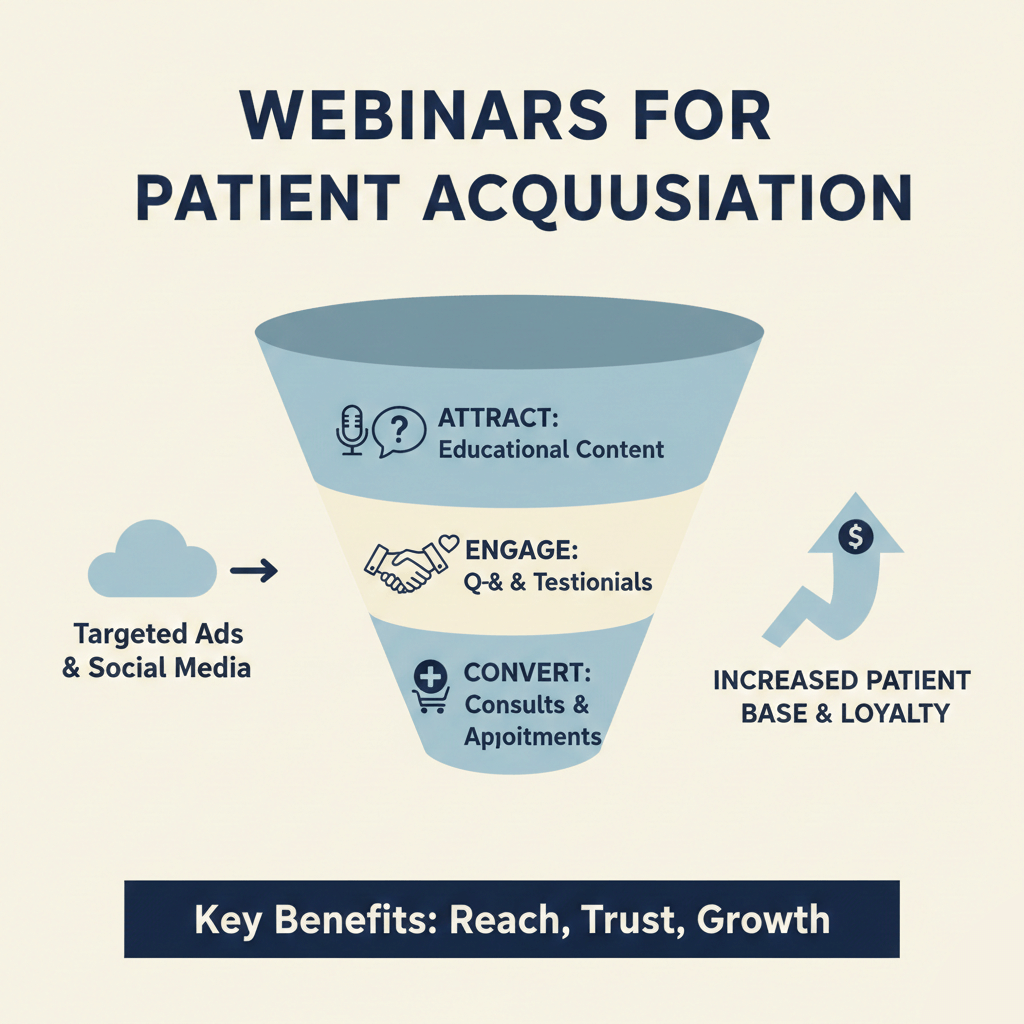
If you want new patients (not just existing ones), you need ads. Facebook and Instagram are excellent for doctors’ lead generation.
- Target local audiences (radius around your clinic).
- Use video ads inviting them to the event.
- The “lead magnet” is the webinar registration.
Social Media Organic
Post on your practice’s Facebook, Instagram, and LinkedIn. Create a short 30-second video of yourself inviting followers to join. Pin it to the top of your profile.
Phase 5: The Follow-Up (Where the Magic Happens)
This is the most critical section of this guide.
Most practices fail here. They host the webinar, get a few bookings immediately, and then ignore the rest of the list.
The money is in the follow-up.
Only about 10-15% of attendees will book immediately. The other 85% are interested but need a nudge. They might have been busy, distracted, or just hesitant. You need a patient conversion funnel.
The 72-Hour Nurture Sequence
You must automate this. Do not rely on your front desk to remember to email everyone.
Hour 1 Post-Webinar: The Replay. Send the recording immediately.
- Subject: “Here is the replay (and your next step).”
- Body: “Thank you for joining. If you missed it, here is the recording. If you are ready to tackle [Condition], click here to book your slot.”
Day 1 Post-Webinar: The Objection Handler: Address the main reason people hesitate. Is it a cost? Is it recovery time?
- Subject: “Worried about recovery time?”
- Body: Address the fear directly. Reiterate the offer.
Day 2 Post-Webinar: The Case Study Share another success story.
- Subject: “How Sarah got her life back.”
- Body: A written case study of a happy patient. “You can have this result too.”
Day 3 Post-Webinar: The “Closing the Doors” Create a deadline for the specific offer (e.g., the reserved slots).
- Subject: “Last chance for priority booking.”
- Body: “I have 2 spots left from the block I set aside. Let me know if you want one.”
The “No-Show” Sequence
Half the people who register will not show up. That is normal. Do not ignore them.
- Send them the replay.
- Send them a summary of what they missed.
- Treat them almost the same as attendees, but acknowledge they weren’t there. “Sorry, we missed you…”
Technical Pitfalls to Avoid
Even the best telemedicine marketing plans can trip over technical wires. Here is a checklist to ensure smooth sailing.
1. The Bandwidth Bottleneck: Ensure you are on a hardwired Ethernet connection. Wi-Fi is unpredictable. If you must use Wi-Fi, ensure no one else in the office is streaming video or downloading large files during your event.
2. The “Mute” Mishap It sounds basic, but it happens. Check your audio levels 10 minutes before you go live. Have a staff member log in as an attendee to verify they can hear you clearly.
3. The Screen Share Struggle Practice sharing your screen. Know exactly which buttons to press. There is nothing more awkward than a doctor asking, “Can you see my slides?” for two minutes while fumbling with settings.
4. The Notification Nightmare: Turn off all notifications on your computer. You do not want a patient’s email or a personal text popping up on the screen while you are presenting. Use “Do Not Disturb” modes.
Making It Engaging: Virtual Patient Events
A webinar should not be a monologue. It is a virtual patient event.
Polls: Run a poll every 10 minutes.
- “How long have you been dealing with this pain?”
- “Have you tried X treatment before?” This keeps them clicking and watching. It also provides valuable data on who is in the room.
Chat: Encourage chat usage early. “Type your city in the chat box, so I know you can hear me.” This breaks the ice.
Handouts: Offer a downloadable PDF checklist or guide at the end. This gives them a reason to stay until the finish line.
The Economics of a Webinar
Let’s look at the ROI.
Hosting a webinar costs time and a small software fee. Let’s say you spend $500 on ads to promote it. You get 100 registrants. 30 people attend live. 5 people book appointments immediately. 3 more books during the follow-up sequence.
That is 8 new patients.
If your average patient value (LTV) is $1,000 (a conservative estimate for many specialists), you just generated $8,000 in revenue from a $500 spend and one hour of your time.
That is the power of lead generation for doctors using this one-to-many model.
Why Doctors Hesitate (And Why You Shouldn’t)
The most significant barrier isn’t technology. It is a mindset.
“I am a doctor, not a marketer.”
That is true. But you are also an educator. The root of the word “doctor” is docere, which means “to teach.”
Marketing, in its purest form, is education. It is letting people know that help is available. When you view webinars through this lens, the “sales” aspect disappears. You are simply fulfilling your oath to help people. You are just doing it digitally.
Furthermore, patients want this. The healthcare system is opaque and confusing. A doctor who takes the time to explain things clearly, for free, earns massive points. You are building a brand based on generosity and expertise.
Common Mistakes in Healthcare Webinars
1. Being Too Clinical: Do not speak like you are at a medical conference. You are talking to laypeople. Avoid jargon. If you must use a medical term, explain it immediately. Use metaphors. The knee isn’t just a “hinge joint”; it’s like the shocks on your car.
2. Being Too Salesy. If you spend the whole time bragging about your awards and your clinic, people will tune out. Focus on them. Focus on their problems. The sale happens naturally because you provided value.
3. Ignoring the Call to Action (CTA) You must tell them what to do next. Be directive. “Click the button below to schedule.” If you are vague (“Give us a call sometime”), they won’t do it.
4. Giving up after one year of our first webinar might be clunky. You might only get three people. Do not quit. Consistency is key. Like any skill, you get better with repetition.
Advanced Tactics: Evergreen Webinars
Once you have nailed the live presentation, you can automate it.
An “Evergreen Webinar” is a recording that plays like a live event. A patient visits your site at 2 AM, signs up, and watches the presentation immediately (or at the next scheduled slot).
This creates a 24/7 patient acquisition machine.
However, warning: Do not fake it. Do not pretend it is live if it isn’t. Be transparent. “Watch our on-demand class.” It works just as well without the deception.
This allows you to run ads to the webinar continuously, feeding your practice with new leads while you sleep.
The Role of Staff
You cannot do this alone. Your staff plays a vital role.
- The Moderator: Have a staff member in the chat answering basic logistical questions (“Is there sound?”) and flagging medical questions for you to answer at the end.
- The Intake Coordinator: Ensure your front desk knows the webinar is happening. They should be ready for the influx of calls the next day. They should know the specific offer you made.
- The Tech Check: Have someone responsible for setting up the lights and camera so you can just walk in and talk.
Partnering for Success: Invigo Media
While the concept of a webinar is simple, the execution involves many moving parts. You have to manage the landing pages, email automation, ad spend, slide design, and technical setup.
For a busy physician, this can quickly become a second job. You should be focused on patient care, not troubleshooting microphone drivers or writing email copy.
This is where InvigoMedia steps in.
As a leader in healthcare video marketing and lead nurturing, Invigo Media takes the weight off your shoulders. We don’t just tell you to host a webinar; we build the entire ecosystem for you.
How Invigo Media Supports Your Practice:
- Topic Strategy: We analyze search data and market trends to help you choose medical webinar topics that are guaranteed to attract attention.
- Funnel Construction: We build high-converting registration pages and automated email sequences that nurture your leads before and after the event.
- Technical Management: We handle the platform setup. We ensure the stream is smooth. We manage the recording.
- Promotional Power: Our team runs targeted ad campaigns to fill your virtual room with qualified local prospects.
- Post-Webinar Conversion: We implement advanced follow-up strategies to maximize the number of appointments booked from every event.
We understand the nuances of the medical field. We know the compliance requirements. We know how to position a doctor as an authority without crossing ethical lines.
Your expertise allows you to heal patients. Our expertise will enable you to reach them.
Are you ready to fill your appointment book and establish yourself as the leading authority in your field?
Stop relying on referrals and hope. Take control of your patient acquisition pipeline.
Contact Invigo Media today. Let us handle the marketing so that you can focus on the medicine. Let’s build your first webinar campaign together.
FAQs: Hosting Medical Webinars
Q: How often should I host a webinar?
A: Monthly is a great cadence. It gives you enough time to promote it and follow up without overwhelming your schedule.
Q: What is the best day and time?
A: Tuesday, Wednesday, and Thursday are generally best. For working adults, 7:00 PM or 12:00 PM (lunch hour) works well. Test different times to see what your audience prefers.
Q: Do I need a slide deck?
A: Yes. Visuals help retention. Use more images and less text. Do not read off the slides.
Q: What if no one asks questions during the Q&A?
A: This happens. Prepare 3-5 “seed questions” in advance. You can say, “A common question I get in the clinic is…” This usually warms up the audience to ask their own.
Q: Can I charge for the webinar?
A: Generally, no. If the goal is patient acquisition, the webinar should be free. You are trading your knowledge for their contact information and attention.
Q: How long should the webinar be?
A: 45 to 60 minutes is the sweet spot. 30-40 minutes of content, followed by 15-20 minutes of Q&A.
Q: Is it okay to use a script?
A: Bullet points are better. Reading a script word-for-word sounds robotic and kills the connection. You know your subject matter; trust yourself to speak naturally.