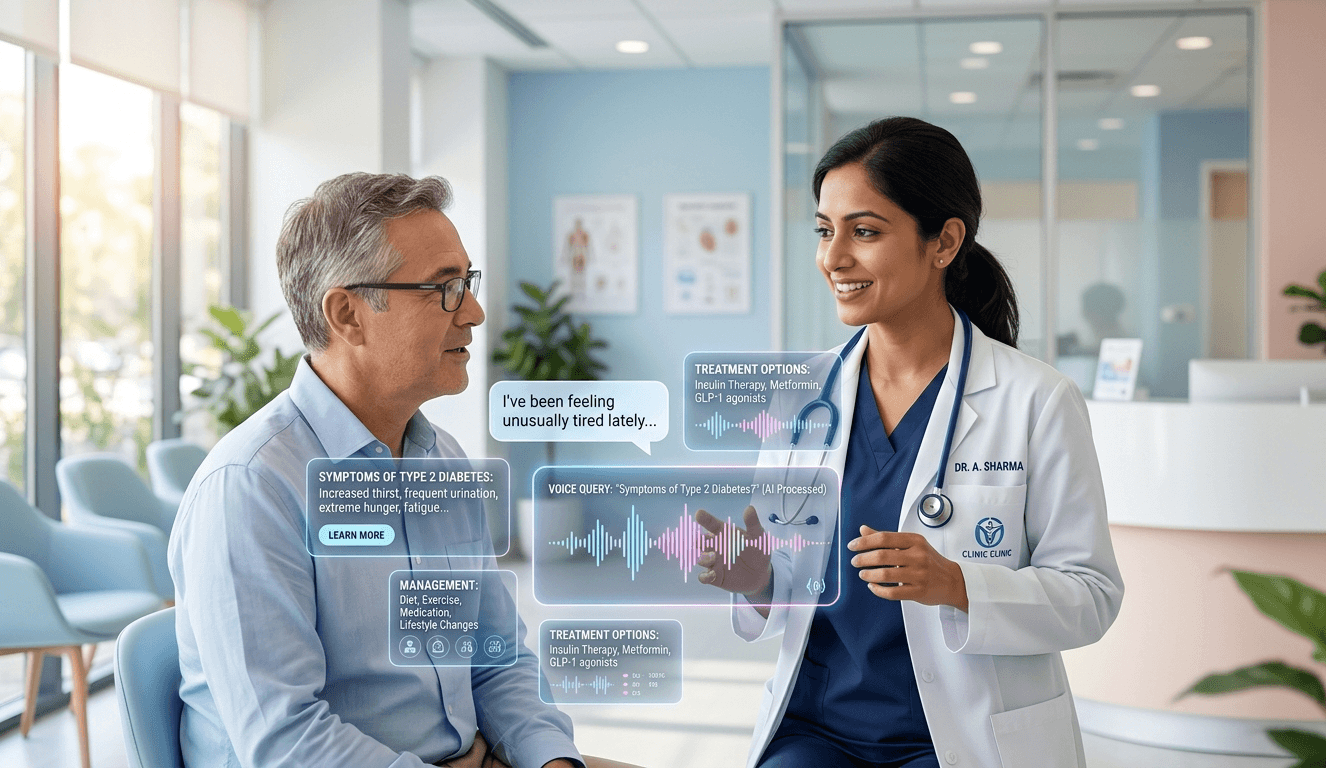

“Ditch the voicemail. AI voice agents for healthcare provide 24/7, empathetic patient support, instant booking, and HIPAA-secure triage.”
The traditional model of managing inbound patient calls is strained to the breaking point. Medical practices across the country grapple with a familiar set of challenges: overflowing voicemail boxes, frustrated front desk staff, and the nagging knowledge that missed calls equate to lost revenue and compromised patient care. Let’s face it, voicemail isn’t cutting it anymore. In our digitally-driven world, people expect immediacy, empathy, and effective solutions, not a recorded message promising a callback. For healthcare providers, this disconnect isn’t just an inconvenience; it’s a systemic bottleneck that hinders operational efficiency and undermines patient relationships. This is where the introduction of AI voice agents for healthcare emerges not as a futuristic fantasy, but as a practical, vital evolution in how practices communicate and care for their patients.
Consider the journey of a patient trying to contact your office. Maybe they’re dealing with a sudden onset of symptoms, need to clarify pre-operative instructions, or are a new patient simply trying to book their first consultation. They call, only to encounter a long queue. They hold. They wait. Finally, perhaps after ten or fifteen minutes, they’re transferred to voicemail. They leave a hesitant message, and then they wait again, often unsure when – or if – they’ll receive a response. Unfortunately, this process is the rule rather than the exception. It places an enormous cognitive load on patients and creates unnecessary anxiety. And for the practice, every one of those missed connections, every message left hanging, represents a potential service breakdown, a lost opportunity to help a patient, and a tangible hit to the bottom line.
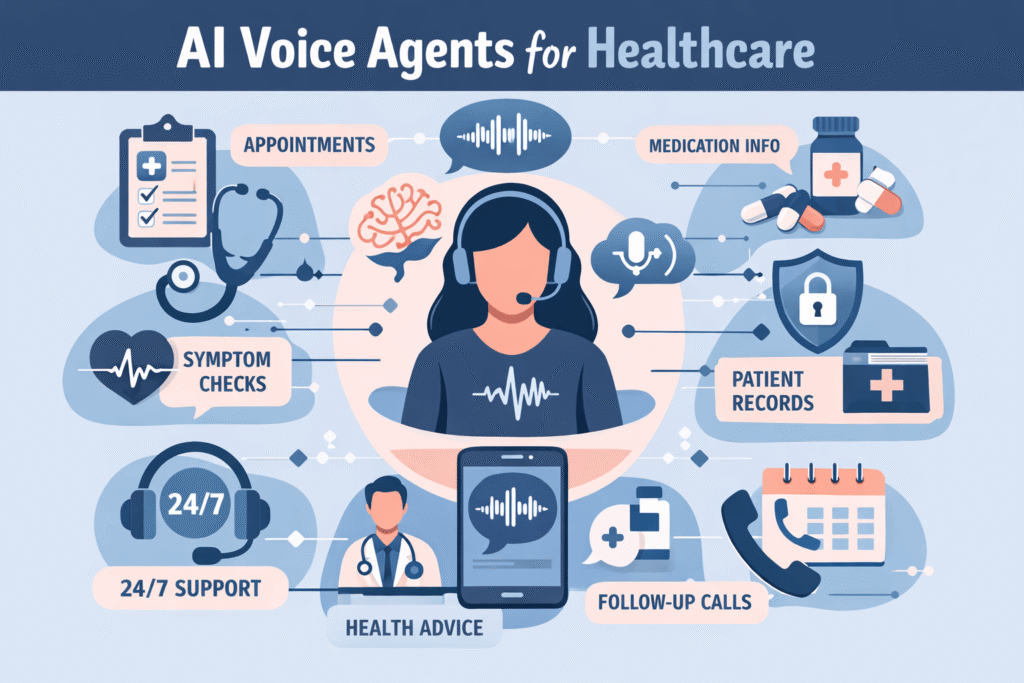
The Limitations of the Status Quo
Let’s dissect why the conventional approach to healthcare telephony is failing.
1. The Bottleneck of Voicemail
Voicemail is an asynchronous communication system trying to solve synchronous problems. It’s passive. It captures information but doesn’t act on it. For the busy medical administrator, listening to and documenting voicemail messages is a tedious, time-consuming task that often occurs hours or even days after the original call. This delay is problematic for time-sensitive matters. A patient experiencing a potential side effect from a new medication cannot afford to wait 4 hours for a callback to learn whether they should stop taking it. Voicemail also fails to capture the nuances of patient need. A desperate parent calling about a sick child will leave a message thick with emotion, but that urgency isn’t transcribed, prioritized, or acted upon in real-time.
2. The Strain on Front Desk Staff
Your front desk team – the vital administrators who manage patient flow, check-ins, scheduling, and billing – is simultaneously juggling telephone calls. They are the human filter, the first point of human contact, and their role is critical. However, they are often overworked and constantly interrupted by ringing phones. This high-pressure environment inevitably leads to stress, burnout, and – significantly – an inability to dedicate their full attention to the patient standing right in front of them. It’s a lose-lose situation. The patient in the office feels less-than-prioritized, and the patient on the phone gets a rushed or, even worse, missed response. Front desk support should empower your staff, not exhaust them.
3. The Inefficiency of Traditional Call Centers
Many practices turn to call centers (either outsourced or in-house) to handle call overflow. While this might seem like a solution, it often introduces new problems. External call centers often have high staff turnover, making consistent training on your practice’s specific protocols, physician preferences, and even the pronunciation of complex medical terms difficult, if not impossible. Furthermore, call center agents typically work from a scripted interface. They are often instructed to gather basic information but lack the autonomy or training to do anything else, leading to a frustrating experience where the patient explains their issue multiple times only to be told, “Someone from the office will have to call you back.” This defeats the purpose of “answering” the call. You’re simply outsourcing the message-taking. In terms of providing actual service, it’s only slightly better than voicemail. The human element of genuine problem-solving is conspicuously absent.
The Problem of Lost Conversations and Lost Revenue
Every time a phone call to your medical practice goes unanswered or ends up in voicemail, there’s a serious financial implication. It’s not just a statistic on your phone system dashboard; it’s quantifiable lost revenue. This happens in several crucial ways.
1. The New Patient Call
Imagine a potential new patient searching for a dermatologist. They find your practice online, look at your positive reviews, and are ready to book. They call your number. The phone rings ten times and then cuts to voicemail. They hang up and call the next practice on their search list. You just lost a potentially high-value patient, along with all the subsequent treatments, referrals, and long-term care they represented. This is missed revenue from unmanaged inbound calls in its purest, most immediate form. These are warm leads that you have worked hard (and spent marketing dollars) to generate, only to lose them at the last, most critical step of engagement.
2. The Existing Patient Looking to Schedule
Existing patients need to schedule follow-ups, procedures, and routine check-ups. If they can’t easily connect with your office to find a convenient appointment time, they often delay. This delay means appointments are pushed further and further out, impacting cash flow and potentially patient outcomes. Even worse, frustration might lead them to seek care elsewhere for certain needs, a phenomenon known as patient leakage. A simple task like booking an annual physical shouldn’t be an ordeal. If your practice makes it difficult, some patients will inevitably move to a provider where scheduling is effortless.
3. Operational Overhead
There is also a significant, yet often overlooked, cost associated with managing all these inbound calls. Staff is spending hours playing phone tag, which is an colossal waste of productive time. A staff member leaves a message, the patient calls back and leaves another message, and the cycle continues. This inefficiency dramatically increases administrative overhead without adding corresponding value to patient care. Your skilled administrative team should be engaged in high-value tasks, like managing insurance claims or optimizing clinic flow, rather than repeatedly listening to voicemail transcriptions.
The New Solution: AI Voice Agents for Healthcare
The answer to this crisis isn’t hiring more front desk staff (which may not even be feasible in the current labor market) or implementing a larger, more complex IVR (Interactive Voice Response) system that just shuffles people between menus. The solution is the thoughtful implementation of intelligent automation. This is where AI voice agents come into the conversation, offering a level of sophistication and capability that completely redefines medical call management.
These aren’t simple auto-attendants that ask you to “Press 1 for appointments.” Those are rules-based systems, limited by their pre-programmed pathways and utterly incapable of handling nuance or unexpected conversational turns. If you ask a question not explicitly listed in the menu, a traditional IVR is useless.
AI voice agents represent a major leap forward because they utilize advanced Natural Language Processing (NLP). This is a branch of artificial intelligence that enables a computer to understand, interpret, and generate human language, in both spoken and written form. When a patient calls and speaks to an AI agent, they are not interacting with a rigid script. They are engaging in an actual conversation. The agent listens to the entire sentence, interprets the intent (the ‘why’ of the call), and understands context. This changes the interaction from frustratingly limited to surprisingly human-like and effective.
How NLP Transforms Patient Interactions
Let’s look at the core functions where AI voice agents, powered by NLP, genuinely perform better than any human-staffed front desk could ever do alone, operating as a true virtual receptionist.
1. Instantaneous Response, 24/7
The single most impactful benefit is immediate availability. An AI voice agent is never on another call, never on lunch break, and never goes home at 5 PM. Every single inbound call is answered instantly, on the first ring. This eliminates wait times, the largest source of patient frustration. A patient calling at 9:30 on a Monday morning—the peak calling hour for many practices—gets through right away. A patient calling with a question at 11:00 on a Saturday night gets an answer, not a voicemail. This capability fundamentally transforms the patient experience, communicating a level of responsiveness and accessibility that few human-only practices can match.
2. Intelligent Call Triage and Routing
Using NLP, the agent doesn’t just hear words; it understands purpose. If a patient calls and says, “My prescription refill didn’t show up at the pharmacy, and I’m almost out,” the agent instantly prioritizes this as a high-urgency issue. It might then use its integration with your Electronic Health Record (EHR) system to check the prescription status, or, based on your office’s rules, immediately route that specific call to a dedicated nurse line, perhaps sending a concurrent text alert to a staff member. It’s triaging in real-time, just like a seasoned medical assistant would, but faster and more consistently. The days of all patient calls being treated with the same low level of urgency (usually via voicemail) are over. This level of patient communication ensures that the most critical needs receive immediate attention.
3. Real-Time Appointment Booking
This is the biggest driver of revenue and efficiency. A modern AI voice agent isn’t just a message-taker; it’s an active participant. Integrating directly with your scheduling software, it can help a patient book an appointment right there on the initial call.
A new patient says, “I’d like to schedule an initial consultation with Dr. Smith, please.” The agent, recognizing this intent, asks clarifying questions (e.g., about the reason for the visit and the type of insurance). It then uses a secure, HIPAA-compliant API to access Dr. Smith’s real-time calendar and presents several available options: “Dr. Smith has availability next Tuesday at 9:00 AM, 11:30 AM, or 2:00 PM. Would any of those work for you?” The patient selects a time, and the agent books the appointment immediately, sends a confirmation text, and adds the patient’s information to the practice’s patient management system. The whole process takes two or three minutes. Compare this to the alternative: the patient leaves a voicemail, a busy staff member calls back two hours later, leaving a voicemail for the patient, and this game of phone tag might continue for days. AI has completely removed the friction from the entire process.
4. Answering FAQs with Human-Like Empathy
Many calls to a medical practice are repetitive questions: “Where are you located?” “What insurance plans do you accept?” “Is Dr. Garcia in the office today?” “Do you have any new patient forms I need to fill out before my appointment?” Staff often spend countless hours answering these exact questions. An AI voice agent can be trained on a practice-specific knowledge base, allowing it to provide instant, accurate answers to hundreds of these common queries.
And crucially, these interactions are not mechanical. Thanks to advancements in voice technology, these agents can respond with natural inflection and conversational flow. Modern conversational AI can pick up on hints of worry or urgency in a caller’s voice and respond accordingly, with calm, empathetic language. For example, if a mother calls about a sick child, the agent’s response isn’t just a robotic recitation of data points; it’s designed to be comforting. It can recognize keywords suggesting distress and adopt a supportive tone, reassuring the patient while collecting necessary details. This ability to deliver a polished, helpful, and empathetic interaction is key.
5. Seamlessly Integrated and HIPAA-Compliant
One of the most important considerations for any healthcare technology is security and compliance. Leading AI voice agent platforms are built to be HIPAA-compliant AI, with robust end-to-end data encryption and strict access controls. Furthermore, these aren’t standalone, siloed products. They must integrate seamlessly with your existing technology stack – your EHR, your practice management software, and your primary phone system. This ensures that information flows smoothly. If an agent collects a new patient’s details, that information shouldn’t be stored as a separate record; it should be immediately entered into your core patient database.
6. Capturing Missed Opportunities and Driving Growth
By answering 100% of calls and converting callers (e.g., booking a new patient or a high-value procedure) on the first contact, AI dramatically improves inbound call conversion. The financial impact is profound. It’s not just saving your staff some time; it is actively generating revenue that would have been previously lost to competitors. It represents a quantifiable return on investment.
Think of it as adding a superstar employee to your team who works for a fraction of the cost, never takes a day off, can handle 100 simultaneous calls, and never forgets a protocol. The ability to instantly transform incoming leads into booked appointments is a massive competitive advantage.
Empowering Your Human Team
A common and understandable concern is that AI will replace human staff. However, in the context of healthcare administration, the opposite is true. AI voice agents should be viewed as technology that supports your team, not substitutes for them. By offloading the burden of routine inquiries, scheduling, and basic triage, your valuable human resources are free to focus on their highest-value work.
Your front desk team is liberated from being glorified message-takers and phone tag players. They can now devote themselves to providing exceptional face-to-face patient service in the office, managing complex billing issues, or supporting clinical staff. In short, it allows them to be more human, focusing on empathy and problem-solving where it matters most.
This technology represents a transformation from a reactive model (where calls are missed, and then staff are constantly playing catch-up) to a proactive model (where every interaction is handled immediately and efficiently).
InvigoMedia: A Partner in This Transformation
Successfully implementing an advanced solution like this is more than just buying software. It requires a thoughtful strategy, properly configured to your specific clinical and business workflows, and robust integration with your existing systems. It involves defining call flows, training the agent on your unique vocabulary and protocols, and ensuring complete, HIPAA-compliant validation. This is where partnering with an experienced expert becomes critical.
InvigoMedia stands apart as a leader in this field. We bring deep, practical experience to the table, specifically focused on the unique challenges and opportunities within the medical and aesthetic practice landscape. Our sophisticated voice AI technology and implementation services are designed to address the common pain points of inbound patient communication, ensuring that no patient call ever goes unanswered. We do not offer a “one-size-fits-all” product; instead, we build highly customized solutions tailored to each client’s operational goals and patient experience standards.
InvigoMedia provides end-to-end implementation support, including:
- Practice-Specific Configuration: We program your voice agent with your unique workflows, physician preferences, and clinic-specific FAQs.
- Deep Integration: We ensure seamless compatibility with your existing EHR and practice management systems.
- Compliance Support: We handle the necessary steps to ensure your AI agent operates within a full HIPAA-compliant framework.
- Ongoing Support and Training: We provide continuous monitoring and performance tuning to ensure the agent learns and improves.
By partnering with InvigoMedia, you’re not just deploying new technology. You are making a strategic commitment to improving operational efficiency and prioritizing the patient experience.
The Future of Your Front Desk is Now
The age of relying on voicemail as a central pillar of patient communication is coming to an end. It is simply inefficient and costly. AI voice agents, with their remarkable capability for instantaneous, empathetic, and effective communication, are not just a nice-to-have upgrade. They are becoming essential tools for modern healthcare practices that are serious about improving accessibility, patient satisfaction, and financial performance.
Don’t allow your practice to be defined by missed calls and frustrated patients. Step into the future of healthcare communication and transform your inbound call center into a major source of growth and competitive advantage. The future of the patient-centered front desk is automated, human-like, and always available. Your staff, your patients, and your practice will all benefit.
Frequently Asked Questions (FAQs)
1. Won’t my patients get frustrated talking to an AI?
This is a common concern. However, modern conversational AI is a significant departure from the frustrating “Press 1 for this, Press 2 for that” systems of the past. Using advanced NLP, our agents are designed to engage in natural, flowing conversations. When a patient gets an instant response, has their question answered directly, or can book an appointment immediately—all without waiting on hold—their experience is overwhelmingly positive. We find that the convenience and speed of AI voice agents far outweigh any initial hesitation, especially for routine tasks. It’s important to remember that the alternative is usually voicemail, which patients overwhelmingly find frustrating.
2. How can an AI possibly show empathy?
While it’s true that AI cannot feel true emotion, it can be programmed to recognize and respond to emotional cues with an appropriate tone and helpful, supportive language. Our conversational models are trained to detect urgency or concern in a patient’s voice, and to use words and a cadence that convey understanding. For example, if a patient calls about a post-operative concern, the agent’s response is designed to be calm and reassuring while collecting the necessary medical details for the clinical team. It might say, “I understand that you’re concerned about your symptoms, and I want to make sure you get the proper advice. Let me gather some information so I can get a message to the nurse immediately.” This level of helpful and compassionate language goes a long way.
3. How does the AI know how to answer questions about my specific practice?
During implementation, we work with you to build a comprehensive, practice-specific knowledge base. This includes your hours of operation, location, accepted insurance, specific list of services, details about each provider, and dozens of other frequently asked questions. This personalized data is then used to train your custom voice agent. The result is an agent that isn’t just generic, but rather sounds and acts like a highly trained extension of your own front desk team. We also continuously monitor the types of questions patients ask and update the knowledge base as your practice grows or evolves.
4. Is the AI truly secure and HIPAA-compliant?
This is a non-negotiable requirement. Any solution we deploy is built on a foundation of robust security. We use end-to-end encryption for all audio transmissions, and any personal health information (PHI) collected by the voice agent is securely stored and managed in a full HIPAA-compliant environment. Our platform adheres to strict security protocols to prevent unauthorized access and ensure the integrity of your patient data. Ensuring patient privacy and data security is always our top priority.
5. What if the patient has a question the AI can’t answer?
One of the most powerful features of our AI voice agent is its ability to recognize its limitations. If a patient asks a question or has a concern that is too complex for the AI to handle, it is programmed to execute a seamless transfer. This could mean transferring the call to a human front desk staff member in real time, or, if after hours, taking a detailed message and ensuring it is sent to the right person for swift follow-up. We configure this based on your practice’s rules and preferences, ensuring that a patient is never left in a conversational dead end. This layered approach ensures that every patient interaction, regardless of its complexity, is managed effectively.
6. How much work is involved in setting this up?
We are here to do the heavy lifting. The implementation process, while comprehensive, is designed to minimize disruption to your practice. Our team will work with you to understand your current workflows, common patient questions, and scheduling rules. From that information, we handle the technical side: building the knowledge base, configuring the AI’s responses, setting up the API integrations with your EHR, and ensuring HIPAA compliance. Our goal is to provide you with a turnkey solution that is fully optimized and ready to go, and to equip your staff with the training needed to monitor and manage the system effectively. We view this as a strategic partnership designed to support your long-term success, and we stand with you every step of the way.