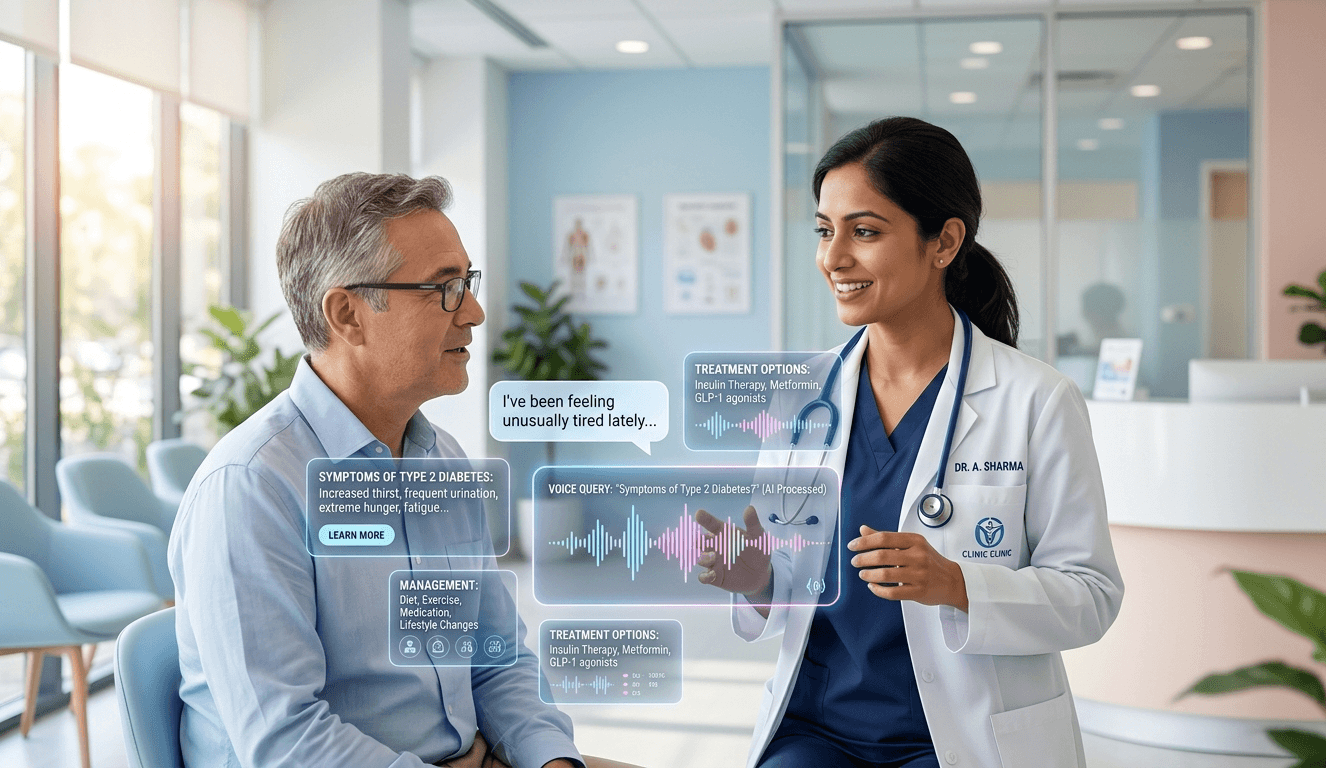

“Ditch high costs and long hold times. Explore the best medical answering service alternatives like AI to boost clinic efficiency 24/7.”
When patients call a doctor’s office, they usually need help right away. They might have a screaming toddler with a fever or a nagging question about a new prescription. However, many medical practices still rely on old-school human call centers. These traditional services often lead to long hold times, frustrated callers, and high monthly bills.
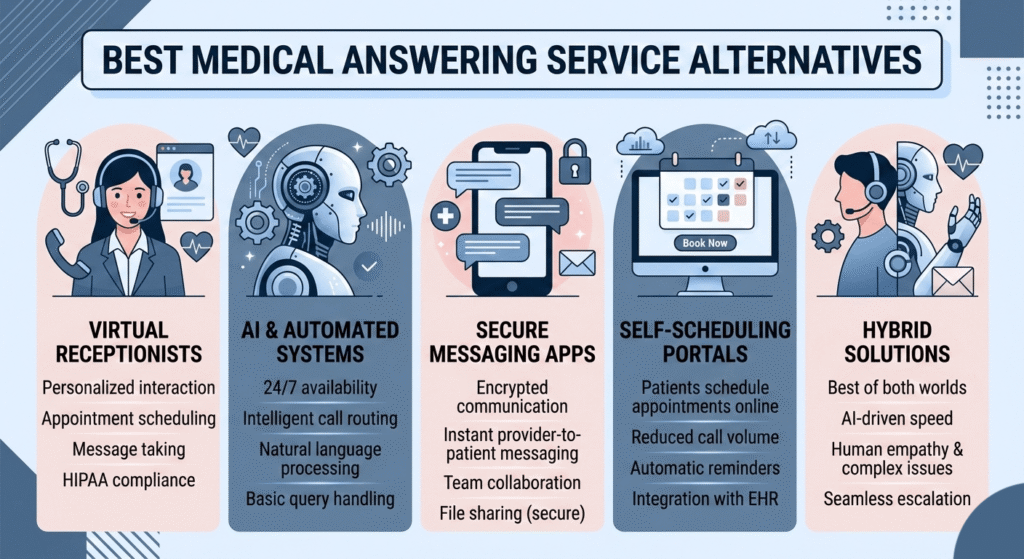
In today’s fast-paced world, the best medical answering service alternatives aren’t just other human agencies. The real shift is moving toward Artificial Intelligence (AI). AI doesn’t get tired, it doesn’t put people on hold, and it costs a fraction of a human team.
This guide explores why AI is quickly replacing the traditional medical call center. We will look at the hidden costs of human operators and how modern technology can save your practice time and money.
Why Traditional Medical Answering Services Are Failing
For years, the standard solution for after-hours calls was a third-party call center. While this was better than a busy signal, it created several new problems.
1. The High Cost of Human Labor
Hiring people is expensive. A traditional medical call center must pay for office space, specialized training, and employee benefits. They pass these costs on to you. Most human services charge by the minute or by the call. If you have a busy month, your bill can skyrocket unexpectedly.
2. Lack of Specialized Medical Knowledge
Operators at large call centers often handle calls for many different industries. One minute, they talk to a patient about a cardiology appointment; the next, they take a message for a local plumber. This lack of focus leads to errors. They might misspell a medication name or fail to understand the urgency of a symptom.
3. Inconsistent Quality and Long Wait Times
Human staff can only handle one call at a time. If five patients call at 8:05 AM, four of them will wait on hold. This creates a bad first impression. Furthermore, an operator’s mood can change depending on how long their shift has been. A tired worker might sound short or impatient with a worried caller.
The Rise of the Virtual Medical Assistant
Modern practices are turning to a virtual medical assistant powered by AI. This isn’t just a “press 1 for billing” menu. It is a smart system that understands natural speech.
How AI Handles Calls Differently
When a patient calls an AI-powered service, they get an immediate answer. There is no “please hold.” The AI listens to the patient’s needs and responds in a calm, professional voice. It can perform several tasks simultaneously:
- Patient Intake Automation: Gathering names, dates of birth, and insurance details without a single typo.
- Automated Triage: Sorting urgent calls from routine questions based on specific medical protocols.
- Appointment Scheduling: Syncing directly with your calendar to book or move visits.
Cost-Benefit Analysis: AI vs. Human Call Centers
If you want to reduce your operational overhead, you have to look at the numbers. Most practices see a significant cost reduction when they switch to AI.
| Feature | Traditional Call Center | AI Answering Service |
| Availability | Subject to staffing levels | Instant 24/7/365 |
| Accuracy | Prone to human error | 99% data precision |
| Scalability | Must hire more staff | Scales instantly |
| Monthly Cost | $500 – $5,000+ | $50 – $500 |
| Integration | Manual data entry | Automatic EHR sync |
Reducing Operational Overhead
By using AI, you eliminate the need for a large front-desk team to spend hours on the phone. This allows your in-office staff to focus on patients physically in the building. Instead of answering the phone 50 times a day to provide directions or office hours, your team can focus on clinical tasks.
Improving the Patient Experience with Precision
Patients today expect “Amazon-style” speed. They don’t want to wait until Monday morning to hear back from a doctor.
Instant Gratification
An AI system provides answers immediately. If a patient wants to know if you take their insurance, the AI can tell them in seconds. If they need a refill, the AI can verify the request and send it to the nurse’s queue. This speed builds trust.
HIPAA Compliant Messaging
Security is a major concern in healthcare. Many human call centers still use unencrypted email or text to communicate with doctors. This is a massive risk. AI alternatives use HIPAA-compliant messaging systems. They encrypt every piece of data from the moment the patient speaks until it reaches your secure portal.
Smart Features of Modern Practice Management Solutions
The best medical answering service alternatives do more than just answer the phone. They act as a central hub for your clinic communication.
1. Patient Intake Automation
Manual data entry is a slow process. AI can collect a patient’s medical history and insurance info before they even step into the office. This data flows directly into your practice management solutions, reducing the “clipboard time” in the waiting room.
2. Automated Triage
Not every call is an emergency, but every caller thinks theirs is. AI uses logic-based branching to ask the right questions. If a patient reports chest pain, the AI can immediately instruct them to hang up and dial 911 or connect them to an on-call doctor. If they just have a mild rash, they can be offered an appointment for the next day.
3. Healthcare Outsourcing Redefined
In the past, healthcare outsourcing meant sending your calls to a different country. Now, it means outsourcing to a cloud-based intelligence. This keeps your data local, secure, and accurate.
Why InvigoMedia is the Superior Alternative
Choosing the right technology partner is just as important as the technology itself. While many companies offer basic bots, InvigoMedia provides custom-built AI solutions specifically for the medical field.
Deep Healthcare Experience
Invigo Media understands that a plastic surgery clinic has different needs than a pediatric office. They don’t offer a one-size-fits-all product. They build custom workflows that mirror how your specific practice operates.
Reliability You Can Trust
Traditional services often have “downtime” or staffing shortages. Invigo’s AI systems are hosted on redundant servers with 99.9% uptime. You never have to worry about a “call out” or a “sick day.”
Higher Patient Satisfaction
Because the AI is trained on medical terminology, patients feel like they are talking to someone who actually knows what they are doing. The responses are clear, professional, and helpful. This leads to better online reviews and higher patient retention.
How to Transition Your Clinic to AI
Moving away from a human call center might seem scary, but the process is actually quite simple.
Step 1: Audit Your Current Calls
Look at your monthly phone bill. How many calls are routine? How many could be handled by a machine? You will likely find that 70% of your calls are simple requests that AI can handle easily.
Step 2: Choose Your Features
Decide what you want the AI to do. Do you need it to schedule appointments? Or just take messages and route them to the right department?
Step 3: Implement and Train
Work with a provider like Invigo Media to set up your custom voice. You can choose the tone and the specific instructions the AI gives to your patients.
Conclusion
The era of the crowded, expensive medical call center is coming to an end. Between the high costs and the frequent mistakes, human operators simply can’t compete with the new generation of AI. By choosing the best medical answering service alternatives, you protect your bottom line and your patients’ health.
If you want to lower your operational overhead while providing 24/7 care, it is time to look at AI. Companies like Invigo Media are leading the way by creating tools that think like medical professionals but work with the speed of a computer.
Don’t let your patients wait on hold any longer. Switch to a smarter, faster, and more secure way of communicating.
Frequently Asked Questions (FAQs)
Is AI really as good as a human at understanding accents?
Yes. Modern AI uses advanced Natural Language Processing (NLP). It can understand different accents and dialects much better than a distracted human operator in a noisy call center.
Is an AI answering service HIPAA-compliant?
The best ones are. Look for providers that offer a Business Associate Agreement (BAA) and use end-to-end encryption. Invigo Media ensures all data handling meets or exceeds federal standards.
Will my older patients be frustrated by a “robot”?
Actually, most patients prefer a “robot” that gives them an answer in 30 seconds over a “human” that keeps them on hold for 10 minutes. As long as the system is easy to use and provides real help, satisfaction rates remain high.
How much can I save by switching to AI?
On average, medical practices see a 40% to 60% reduction in their answering service costs. This doesn’t even include the money saved by reducing errors and improving staff efficiency.
Can the AI handle emergency calls?
Yes. You can program specific “triggers.” If the AI hears words like “bleeding,” “unconscious,” or “severe pain,” it can immediately follow your emergency protocol, such as transferring to a live doctor or emergency services.