

“Secure your investment with a data-driven marketing plan for acquiring a practice. Minimize patient attrition and grow in just 6 months.”
Acquiring an existing medical practice is not just a financial transaction. It is an emotional and behavioral shift. You are taking over a business with established relationships, ingrained workflows, and, most importantly, a patient base that trusts the previous doctor. While you have the excitement of new ownership, the existing patients might feel uncertain or even anxious. This transition is a critical period. If handled poorly, you risk losing a significant portion of the very asset you worked so hard to acquire. The key to a successful takeover lies not just in operational efficiency, but in your marketing and communication.
You need a robust, detailed marketing plan to acquire a practice. This is not just about finding new patients; it is primarily about retaining the ones you already have. This article outlines a comprehensive, step-by-step marketing timeline for the first six months post-acquisition. We will cover everything from brand transition and directory updates to patient communication and reputation management. Our focus will be on seamless rebranding and digital authority building to minimize attrition and set the stage for future growth.
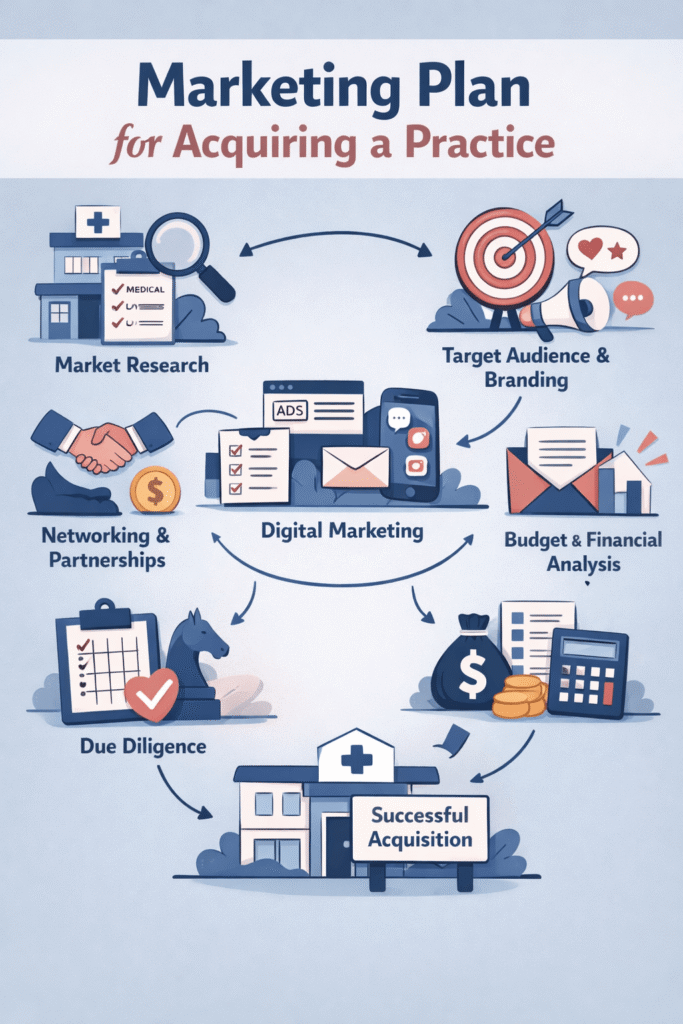
The Foundation: Understanding the Stakes
The acquisition of a medical practice is often seen as a fast track to growth. However, this path is fraught with potential pitfalls. The biggest risk you face is patient attrition. Think about it from the patient’s perspective. They have built a relationship, sometimes over decades, with the previous physician. This doctor knows their history, understands their quirks, and is someone they trust implicitly. Now, suddenly, that doctor is gone, replaced by a new face they do not know.
It is natural for patients to question if the level of care will remain the same. Will the office feel different? Will their long-held medical history be respected? If you leave these questions unanswered, patients will find a new practice where they feel comfortable. Research shows that patient attrition in the first year following an acquisition can be as high as 20% to 30%, or sometimes even higher. This can drastically reduce the value of your acquisition.
Therefore, your primary marketing goal for the first six months is stabilization and trust-building. You cannot treat this as a hostile takeover or a corporate restructuring. It is a transition of care, a baton pass in a long race. Your initial efforts should prioritize existing patients, ensuring they feel valued, informed, and comfortable. New patient acquisition, while essential, becomes the secondary focus after you have secured the core of your practice. This is the central tenet of medical practice acquisition marketing.
Pre-Acquisition and Month 1: Setting the Stage and Immediate Actions
Your marketing work begins before the papers are officially signed. You need to gather critical information and prepare your messaging. While the legal and financial details are finalized, your marketing team (whether internal or external) should be working on a comprehensive checklist.
1. The Medical Practice Transition Checklist (Pre-Acquisition)
This checklist is your roadmap. It ensures you do not miss any critical steps. Before you take over, complete the following:
- Review Existing Assets: Analyze the current practice’s website, social media, patient forms, and communication templates. This audit identifies what works and what needs immediate attention.
- Establish Key Performance Indicators (KPIs): Define what success looks like. Track metrics like current patient numbers, average patient visits per month, website traffic, and online review ratings. This will give you a baseline to measure your success.
- Draft Immediate Communications: Create the first letters and emails for patients and staff. These should be ready to send as soon as the acquisition is official.
- Identify Critical Directory Listings: Locate all online profiles and directory listings, starting with the major ones: Google Business Profile (formerly Google My Business), Healthgrades, Vitals, and Yelp.
2. The New Doctor Announcement Strategy (Month 1 – Initial Days)
The moment the acquisition is final, the message needs to go out. The worst thing you can do is let patients find out from a rumor or a generic sign on the door. Your strategy must be proactive and personal.
The Announcement Sequence:
- Step 1: Patient Email and Mail: The first communication should be a joint letter from both the retiring/departing physician and you, the new owner. This letter serves a specific purpose:
- The Departing Doctor’s Voice: The previous physician can vouch for you, expressing their confidence in your skills and compassion. This is crucial for transferring trust. They should briefly state why they chose you as their successor.
- Your Voice: Your portion should be warm, respectful, and reassuring. Introduce yourself, mention your background, and share your commitment to maintaining the high standard of care. Reassure them that their medical records are safe and the office location remains the same.
- Call to Action: Do not just announce the change. Encourage them to remain patient. A simple sentence like “We look forward to continuing to serve you” is powerful.
- Step 2: Social Media Announcement: Post a professional photo of the transition (e.g., two doctors shaking hands) on the practice’s social media channels (Facebook and LinkedIn). Share the joint message in the post, along with a link to a dedicated page on the website.
- Step 3: In-Office Announcements: Place professional, welcoming posters or brochures in the waiting room and at the front desk. Staff should be prepared to address patient questions warmly.
3. Maintaining Staff Reputation and Buy-In (Month 1)
Your staff is your front line. They are the faces patients see when they walk in. If your staff is anxious or unhappy, that feeling will be transmitted to the patients. Patient communication strategy must include staff communications.
Before the patient announcement, hold an all-staff meeting. Communicate clearly about the transition. Emphasize that you value their experience and that they are a vital part of the practice’s future. Address their concerns regarding job security, benefits, and procedural changes.
A unified and confident staff can allay many patient fears. Encourage them to talk positively about the new doctor to patients. Provide them with standard scripts to answer common questions, such as “What is the new doctor like?”
Month 2: Digital Foundation and Operational Consistency
With the initial announcement behind you, it is time to build your digital foundation. This is critical for visibility and, more importantly, establishing credibility with those patients who are now researching you. Rebranding a medical clinic needs a solid digital footprint.
1. Updating Directory Listings and NAP Consistency (Month 2)
Your online presence is often a patient’s first point of interaction. Incorrect information can lead to frustration and a loss of trust. Ensuring Name, Address, and Phone (NAP) consistency across the internet is a top priority. This is a core part of marketing for new clinic owners.
- Google Business Profile (GBP): This is the most critical directory. Immediately claim and update the practice’s GBP listing. If the previous doctor had their name on the listing (e.g., “Dr. John Doe’s Practice”), change it to reflect the practice name or your name (if that is your branding). Verify the address, hours, and, most importantly, the phone number. Add new high-quality photos of the staff and clinic.
- Health Directories: Update your profiles on Healthgrades, Vitals, Zocdoc, and other relevant platforms. A new physician profile should be created, and the practice information updated. Consistency here conveys professionalism.
- Local and Niche Directories: Check local business directories, chamber of commerce listings, and relevant niche medical directories. While smaller, incorrect listings on these sites can still confuse patients.
2. Analyzing Website and Online Presence (Month 2)
While a full rebrand might be planned for later, your website must be updated immediately. At a minimum:
- Update the “About” Page: Replace the departing doctor’s bio with yours. This bio should highlight not only your credentials but also your approach to patient care and why you chose this specific practice.
- Contact Information: Ensure all instances of the phone number and address are accurate.
- Services: Confirm that the list of services provided is correct. If you are adding new services, this is a great place to start highlighting them.
- Patient Forms: Ensure any online forms are accurate and lead to the appropriate next steps.
Months 3 & 4: Rebranding and Patient Engagement
Now that the initial transition is stable, you can begin to execute your longer-term rebranding and engagement strategy. This period is critical for cementing patient loyalty and attracting new patients.
1. Developing a Phased Rebranding Strategy (Month 3)
A clinic takeover marketing plan needs to decide on the brand. Are you keeping the existing practice name, or are you rebranding it entirely? This depends on several factors:
- Existing Brand Equity: Is the current name strongly associated with quality care and a positive reputation? If so, keeping the name while subtly modernizing the brand (new logo, fresh color palette) might be the best approach.
- Reason for Change: If the previous name was confusing, outdated, or had a negative association, a complete rebrand might be necessary.
- New Services: If you are significantly changing the practice’s focus, a new name may be required to reflect that.
Whichever path you choose, a phased approach is best for rebranding. A sudden, drastic change can be disorienting.
- Phase 1 (Month 3): Updated Visuals: Update the logo, color palette, and visual assets. Implement this new look on the website, social media, and internal documents. This can feel like a breath of fresh air without a complete disruption.
- Phase 2 (Month 4): External Signage: Update the exterior signs. This is a major visual milestone. Make it an event and announce it to your patients.
- Phase 3 (Month 5-6): Complete Digital and Print Sync: Ensure every touchpoint, from the voicemail greeting to the appointment reminders, uses the new branding consistently.
2. Active Patient Communication and Value-Add (Month 3-4)
Maintaining communication is vital. Do not let your only interaction be the initial announcement and the bill.
- Educational Blog Posts and Articles: Post regular, high-quality content on your website. This content should not just be self-promotional. Address common health concerns of your patient base. This positions you as an expert and builds digital authority. For example, if you took over a family practice, write posts about cold/flu season, child nutrition, or heart health.
- Regular Patient Newsletter: Send a quarterly or even monthly email newsletter. The newsletter can include your latest blog post, introductions to new staff members, announcements of new services, and health tips. This keeps the practice top-of-mind.
- Social Media Engagement: Post consistently on social media. Share helpful health tips, behind-the-scenes photos of your staff (with permission), and positive patient testimonials. This helps humanize your practice and build a community.
Months 5 & 6: Reputation Management and Growth
You have stabilized the practice and are actively engaging your existing patients. Now you can focus on strengthening your reputation and moving from a defensive to an offensive marketing posture. This means actively pursuing new patients.
1. Building and Managing Your Online Reputation (Month 5)
For any medical practice, its reputation is its currency. Online reviews are the primary way potential patients assess credibility. A robust healthcare reputation management strategy is essential.
- Solicit Honest Feedback: Make it easy for happy patients to leave reviews. This can be as simple as asking them at the end of a visit, “How was your experience today? Would you mind sharing a quick review?”
- Incorporate a Review Tool: Use a reputation management platform to send automated, polite text or email requests for reviews after an appointment. These tools make it easy for patients and significantly increase the volume of positive reviews.
- Respond to All Reviews (Both Good and Bad): This is vital. A personal, professional response to every review shows you care.
- Positive Reviews: A simple, specific “Thank you” is all that’s needed.
- Negative Reviews: Address these carefully and professionally. Do not be defensive. Instead, acknowledge their concern, state your commitment to improvement, and invite the discussion offline to resolve it. A thoughtful response can often diffuse a potentially damaging review. A good response can even show potential patients that you care about patient feedback and satisfaction.
2. Shifting to Aggressive New Patient Acquisition (Month 6)
You have secured your base, established your brand, and built a good online reputation. Now you are ready to acquire new patients proactively.
- Optimized Website Content (SEO): The content you have been creating in months 3-4 will now start to pay off. Use SEO best practices to optimize your blog posts, landing pages, and main website pages for relevant medical keywords (e.g., “primary care physician [Your City],” “pediatrician near me”). This will help you show up in local search results.
- Local PPC (Pay-Per-Click) Advertising: Start targeted Google Ads and social media ads. Focus on specific services or key differentiators that make your practice unique. You can target people in your geographic area who are actively searching for a new doctor.
- Local Community Involvement: Sponsor a local sports team, participate in a community health fair, or speak at a local senior center. This offline presence can be powerful in building trust and name recognition in your community.
- Patient Referral Program: Implement a system to reward existing patients for referring new patients. This can be as simple as a small gift card or a discount on future services. Word of mouth is a powerful force, and existing patients can be your best advocates.
The Role of an Expert Partner: InvigoMedia
This comprehensive six-month plan is a lot of work. Managing a new practice while concurrently executing a complex marketing strategy is a monumental task. The risk of attrition is high, and any misstep can have a significant financial impact.
This is where a specialized partner like InvigoMedia can make a critical difference. InvigoMedia has decades of experience specific to medical practice transitions. They understand the nuances, the risks, and the unique challenges involved in retaining patients while aggressively acquiring new ones.
Why Choose InvigoMedia?
- Specialized Expertise: InvigoMedia is not a general marketing agency; it is a healthcare marketing specialist. They understand the language of healthcare, the ethical guidelines, and the complex journey of a patient.
- Proven Process: InvigoMedia does not guess. They have developed and refined a proven, data-driven methodology for managing medical practice transitions. They have a documented track record of success in minimizing patient attrition and accelerating new patient growth.
- Seamless Rebranding: Rebranding a medical practice is more than just a new logo. It is about maintaining a consistent, authentic voice while advancing your practice. InvigoMedia ensures your rebrand is handled seamlessly and professionally, minimizing disruption.
- Digital Authority Building: InvigoMedia is a leader in healthcare digital marketing. They go beyond simple SEO and social media. They focus on building deep digital authority for your new practice through content creation, reputation management, and sophisticated advertising strategies.
- Focus on Your Core Competence: By partnering with InvigoMedia, you can focus on what you do best: providing exceptional patient care. You can trust them to manage the complexities of your marketing, knowing that they have the experience and dedication to make your transition a success.
Conclusion
Acquiring a medical practice is a significant career milestone. It is also an ambitious challenge that requires careful planning and flawless execution. By following this six-month marketing plan, you can successfully navigate the transition, retain your existing patients, and build a thriving, growing practice. Do not leave this critical transition to chance. Choose an experienced partner like InvigoMedia to ensure your success. They have the knowledge, the experience, and the dedication to help you make your new practice everything you imagined. Your patients will thank you, and your bottom line will show it.
Frequently Asked Questions (FAQs)
1. Why is patient attrition such a major concern after an acquisition?
Patients develop deep, often multi-year relationships with their physicians. A sudden change, especially one poorly managed, can create a sense of uncertainty. This uncertainty leads patients to question if they will still receive the same level of care and personalized attention. A proactive communication and reassurance strategy is the only way to manage this and retain patients.
2. What is the single most important thing to do immediately after the acquisition?
The most critical first step is a joint, personal communication from both the outgoing and incoming physicians. This baton-pass communication is vital for transferring the patient’s existing trust from the old doctor to the new one. It must be authentic, positive, and reassuring.
3. What does “NAP Consistency” mean, and why is it so important?
NAP stands for Name, Address, and Phone Number. Maintaining NAP consistency across all online directories, search engines, and local listings is critical for a medical practice. Inconsistent information not only confuses patients but also negatively impacts your website’s search engine rankings (SEO). Consistency signals to search engines that your business is legitimate and reliable.
4. How can I balance my time between seeing patients and managing all these marketing efforts?
This is one of the biggest challenges for new practice owners. It is not a viable long-term strategy to try to do it all yourself. You must either: a) Delegate these tasks to capable staff members and provide them with proper training; or b) Hire an experienced and specialized marketing agency like InvigoMedia. Investing in professional support is almost always the more effective option, allowing you to focus on your core job while knowing your marketing is being managed effectively.
5. How long does the rebranding process typically take, and should I change the name immediately?
A complete rebranding from start to finish usually takes 4-6 months, but it can be longer or shorter depending on the scope. A phased approach is highly recommended. For instance, in the first 1-2 months, you can focus on the website and digital presence. In months 3-4, you can tackle the visual assets (logo, branding, signage). Then, in months 5-6, you can ensure complete consistency across all channels. We often suggest not changing the name in the first 30-60 days to avoid confusing patients during the critical initial transition.
6. How much of my budget should I allocate to marketing in the first six months?
This varies significantly based on factors like the current state of the practice’s digital presence, the competitiveness of your local market, and your growth goals. As a general rule, a newly acquired practice should budget anywhere from 5-10% of its projected gross revenue for marketing and branding in the first year to aggressively stabilize and then grow. A larger upfront investment in the first six months is often necessary for rebranding, building digital assets, and kicking off a reputation management program.