

“Stop wasting PPC budget on bots. Get professional click fraud protection healthcare strategies to block competitors and secure your ROI.”
You run a successful healthcare practice. You want to attract new patients. Naturally, you turn to pay-per-click (PPC) advertising. You set aside a large marketing budget. You launch your Google Ads campaigns. Almost immediately, you see traffic flowing to your website. The dashboard shows hundreds of clicks.
However, your phone stays silent. Your online booking system remains empty. You check your bank account. Google charged you for all those clicks. Where did your money go? Why are there no actual patients?
Welcome to the frustrating reality of digital marketing. You are likely dealing with medical ad fraud. Fake clicks drain your budget rapidly. They steal your opportunity to connect with genuine patients. Healthcare cost-per-click (CPC) rates rank among the highest across all industries. Some keywords cost upwards of fifty dollars per click. Therefore, a handful of fake clicks causes massive financial damage.
This comprehensive guide focuses entirely on healthcare strategies for click fraud protection. We will explain exactly what happens behind the scenes of your campaigns. We will break down the mechanics of fake clicks. Furthermore, we will show you how to implement robust ad security protocols for the healthcare industry. By the end of this guide, you will know exactly how to stop burning your budget.
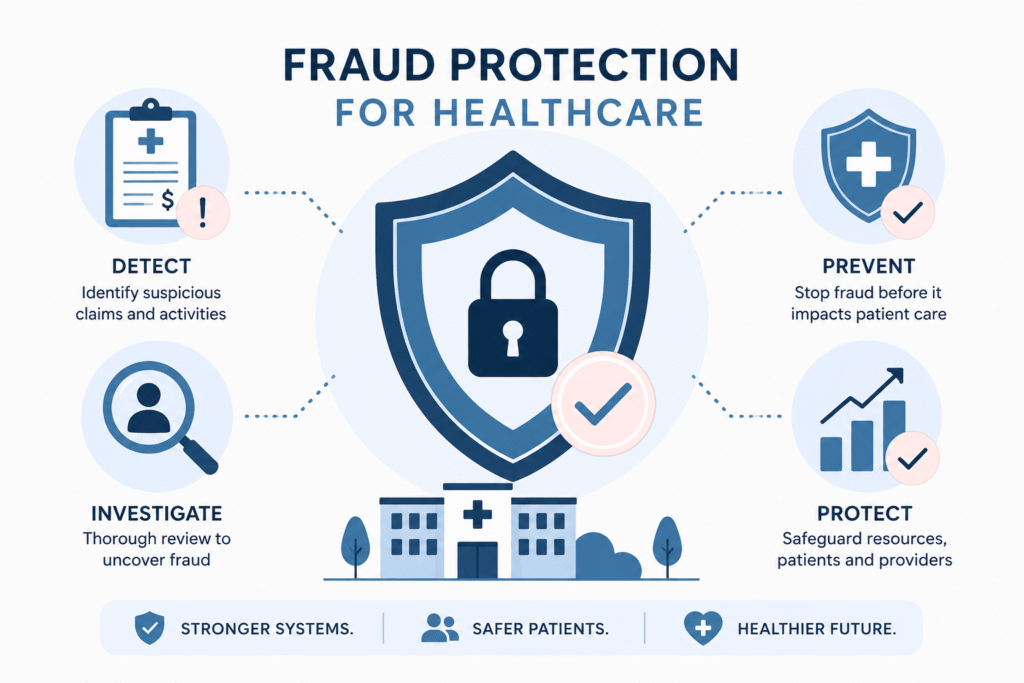
Understanding the Reality of Medical Ad Fraud
Before you can fight the problem, you must understand it. Medical ad fraud happens when a person or a computer program clicks on your online advertisement with malicious intent. These clicks do not come from people who need your medical services. Instead, they come from entities trying to cost you money.
Google Ads operates on a simple premise. You pay a fee every single time someone clicks your ad. Google connects you with people actively searching for your services. For example, a person types “best dentist near me” into the search bar. Your ad appears at the top. The person clicks the ad. You pay Google for that interaction.
The system works perfectly when real people click your ads. However, the system falls apart when bad actors exploit it. When scammers click your ads, you still pay the fee. You lose money. You lose your daily budget cap. Worst of all, your ad disappears from the search results once your budget runs out. Real patients can no longer find you.
Who Is Clicking Your Ads?
You might wonder who actually takes the time to click on healthcare ads maliciously. The culprits fall into three main categories. Each category poses a unique threat to your PPC budget protection efforts.
1. The Ruthless Competitors
Competitor click fraud represents a massive problem in the healthcare industry. Local markets often feature intense competition. Dental clinics, plastic surgeons, and chiropractors fight aggressively for the same patients in the same zip codes.
Imagine a scenario in your local town. Dr. Smith opens a new cosmetic surgery clinic. He wants to dominate the local search results. He sees your ads appear above his. Dr. Smith, or his staff members, might start clicking your ads every morning. They click your ad. They immediately leave your website. They repeat this process throughout the week.
Why do they do this? They want to deplete your daily advertising budget. If your daily budget is $ 100 and each click costs $10, they only need to click 10 times. After ten fake clicks, Google stops showing your ad for the rest of the day. Dr. Smith’s ads move up to the top spot. He effectively steals your real patients by exhausting your resources.
2. The Relentless Bots
Bots cause even more damage than spiteful competitors. Blocking bot traffic requires significant technical effort. A bot is simply a software application programmed to run automated tasks over the internet. Scammers create malicious bots specifically designed to click on advertisements.
These bots crawl the internet continuously. They find your ads. They click them in milliseconds. Some advanced bots even mimic human behavior. They click your ad, scroll down your webpage, and pause for a few seconds. This makes it harder for basic security systems to detect them.
Bot traffic often originates from offshore servers. However, hackers can also route bots through compromised local IP addresses. Networks of infected computers form a “botnet.” A single botnet can generate thousands of fake clicks in a matter of hours. Without proper ad security healthcare systems in place, bots will destroy your monthly budget in a single afternoon.
3. Professional Click Farms
Click farms exist in various parts of the world. A click farm is a physical location filled with hundreds of cheap smartphones or computers. Low-paid workers sit at desks all day. Their only job is to click on specific links, interact with social media posts, or click on paid advertisements.
Competitors or hostile entities can actually hire these click farms. They pay a small fee to a click farm to click on your specific healthcare campaigns. The workers manually search for your keywords. They find your ads. They click them. Because real humans perform these actions on real devices, detecting click farms proves incredibly difficult.
The Financial Impact on Medical Practices
You cannot ignore the financial consequences of invalid clicks in Google Ads activity. Let us break down the exact math to show you how quickly you lose money.
Assume you run an orthopedic clinic. You target high-value keywords like “knee replacement surgery cost” or “best orthopedic surgeon.” Because these surgeries bring in significant revenue, the advertising competition is fierce. You might pay thirty dollars for a single click on these keywords.
You set a daily budget of $300. This budget allows for ten clicks per day. You expect those ten clicks to generate at least two or three phone calls.
Now, assume a competitor targets your campaign. They click your ad five times before lunch. A web-crawling bot finds your ad and clicks it five more times.
Your three hundred dollars is gone. You received ten clicks. You received zero phone calls. Your cost per acquisition (CPA) skyrockets. You generated zero return on investment.
If this happens every single day, you waste $9,000 a month. That equals over one hundred thousand dollars a year in wasted marketing spend. You literally burn your money. This scenario perfectly highlights the absolute necessity of advertising, protecting ROI, and protecting Costs of Fraud.
The financial damage extends beyond the wasted ad spend. Click fraud creates a devastating ripple effect across your entire marketing strategy.
First, fake clicks destroy your analytical data. Good marketing relies on accurate data. You need to know which keywords convert into actual patients. You need to know which landing pages perform best. When bots flood your campaigns, your data becomes useless. A specific keyword performs well because it attracts many clicks. In reality, bots love that keyword. You end up optimizing your campaigns for scammers instead of real patients.
Second, fake clicks damage your website’s performance metrics. When bots or competitors click your ad, they immediately leave your site. This action creates a “bounce.” A high bounce rate signals to search engines that your website offers a poor user experience. Over time, this negative signal can harm your organic search rankings.
Finally, ad fraud wastes your staff’s valuable time. Your receptionists might spend hours answering calls from telemarketers who found your number through fake ad clicks. Your marketing team wastes time trying to figure out why campaigns fail. Time is money in a healthcare practice. You cannot afford to waste either.
Signs You Are a Victim of Medical Ad Fraud
You must learn how to spot the warning signs of fraud. You need to monitor your Google Ads account constantly. Look for these specific red flags in your data.
Sudden Spikes in Click Volume
Your daily click volume should remain relatively consistent. You might see slight variations on weekends or holidays. However, a massive, unexplained spike in clicks usually indicates a problem. If you normally get 50 clicks a day and suddenly you get 300 m on Tuesday, investigate immediately. This sudden surge often points directly to a bot attack.
Plummeting Conversion Rates
A conversion happens when a website visitor takes a desired action. In healthcare, a conversion usually means a booked appointment, a phone call, or a submitted contact form.
Track your conversion rate closely. If your clicks go up, but your conversions stay flat or drop to zero, you have a problem. High traffic with zero conversions serves as the most obvious indicator of competitor click fraud or bot traffic. Real patients eventually call you. Bots never do.
Extremely High Bounce Rates
Log in to your Google Analytics account. Look at the bounce rate for your paid traffic. The bounce rate measures the percentage of visitors who leave your site after viewing only one page.
If your paid traffic shows a bounce rate of ninety percent or higher, proceed with caution. This means almost everyone who clicks your ad immediately hits the back button. While some real users do this, a consistently massive bounce rate usually reveals automated bot behavior.
Suspicious Geographic Locations
You run a local chiropractic clinic in Chicago. You set your Google Ads targeting exclusively for the Chicago area. You only want local patients.
However, you notice traffic originating from other countries. You see clicks coming from Eastern Europe, Asia, or South America. This traffic is entirely fraudulent. Real patients do not fly across the world for a routine chiropractic adjustment. You must implement strict location parameters and paid search monitoring to stop this geographic fraud.
Unusual Time Patterns
Pay attention to exactly when people click your ads. Real patients typically search for medical services during waking hours. They search during their lunch breaks or after work.
Do you notice a flood of clicks happening at three o’clock in the morning? Do these late-night clicks drain your budget before the sun even comes up? Scammers often run their bots overnight when you are asleep, making it impossible to stop them.
Manual Monitoring Techniques: Fighting Back
Once you spot the warning signs, you must take action. Many healthcare marketers start with manual defense strategies. These methods require time and vigilance. They form the baseline for paid search monitoring. Let us examine the manual tools at your disposal.
Reviewing Server Logs
Your website server records every single visit. It logs the IP address, the time of the visit, and the pages viewed. You can ask your web developer to pull these server logs for you.
Analyze the logs specifically for your paid traffic. Look for identical IP addresses clicking your ads multiple times. If you see an IP address from a neighboring town clicking your ad ten times a day, you likely found a malicious competitor.
Implementing IP Exclusion
Google Ads provides a specific tool to block suspicious IP addresses. This tool is called IP exclusion. It serves as your primary manual weapon against competitor click fraud.
Once you identify a bad IP address in your server logs, you log in to the Gin toe Ads dashboard. You navigate to the settings of your specific campaign. You find the “IP exclusions” section. You paste the malicious IP address into the box and save your changes.
From that moment on, Google will no longer show your ads to any device using that specific IP address. If your competitor tries to search for your ad from their office computer, they will see nothing. You successfully protected a portion of your budget.
Adjusting Location Targeting
You must manually tighten your location settings. Do not rely on Google’s default settings. Google often recommends showing ads to people “in, or showing interest in” your targeted locations.
This default setting is dangerous. It allows people halfway around the world to see your ads by simply typing your city name into their search bar.
Change this setting immediately. Select the option to show ads ONLY to people “in or regularly in” your targeted locations. This simple manual switch instantly blocks a massive amount of offshore bot traffic.
Monitoring Click Timestamps
You can use manual paid search monitoring to analyze click timestamps. Look at your Google Ads reports to see exactly when clicks occur. If you notice a distinct pattern of fraudulent clicks at specific times, you can use ad scheduling to avoid them.
Ad scheduling lets you pause your campaigns during high-risk hours. If bots always attack your dental campaign between midnight and four in the morning, simply pause the campaign during those hours. You save your budget for real people searching during the day.
The Limits of Manual Blocking
Manual defense strategies offer a good starting point. However, they possess severe limitations. You cannot rely on manual methods alone for tick fraud protection in healthcare. The scammers are simply too fast and too sophisticated.
The Problem with Dynamic IPs
IP exclusion works well against a single, static IP address. Unfortunately, most internet service providers assign dynamic IP addresses. This means a user’s IP address changes frequently.
A competitor can click your ad today using one IP address. You find that IP and block it. Tomorrow, the competitor restarts their router. They get a brand-new IP address. They click your ad again. You are constantly playing a losing game of whack-a-mole. You block one IP, and another pops up.
The Exhaustion of Server Log Analysis
Manually reviewing server logs takes hours. You have to export massive spreadsheets. You have to filter thousands of rows of data. You have to cross-reference timestamps with your Google Ads reports.
You run a medical practice. You need to focus on patient care. You do not have ten spare hours a week to stare at server logs. Even if you hire an internal marketing manager, their time is better spent creating new campaigns, not hunting for bad IP addresses.
The Speed of Bot Networks
Bots operate at the speed of light. A botnet can generate a hundred clicks in a few seconds. By the time you notice the spike in your dashboard, the damage is already done. Your budget is gone. Manual paid search monitoring simply cannot react fast enough to stop automated bot attacks. You need a system that reacts in real-time.
The Solution: Automated Click Fraud Software
To achieve true advertising ROI, upgrade your defenses. You need to move beyond manual spreadsheets. You must invest in automated click fraud software.
Automated software acts as a highly trained security guard for your Google Ads account. It works twenty-four hours a day, seven days a week. It monitors every single click in real-time. It uses complex algorithms to determine the intent behind each click.
How Automated Software Works
When you install click fraud software, you place a small piece of tracking code on your healthcare website. You can also connect the software directly to your Google Ads account via an API. When a user clicks your ad, the software intercepts the user before they even load your webpage. In a fraction of a millisecond, the software analyzes dozens of data points.
The software checks the user’s IP address against global blocklists. It checks the device fingerprint. It analyzes the user’s past behavior. It determines if the user is using a Virtual Private Network (VPN) to hide their location.
If the software determines the user is a real human seeking medical help, it lets them through to your website.
If the software determines the click comes from a bot, a click farm, or a malicious competitor, it instantly flags the IP address. The software communicates directly with Google Ads. It automatically adds the bad IP address to your campaign’s IP exclusion list.
The next time that bot or competitor tries to search for your ad, they see nothing. The software blocks them before they can click again.
Key Benefits of Automation
Automated click fraud software provides several massive advantages for healthcare practices.
First, it offers instant reaction times. The software blocks bad traffic instantly. It does not wait for you to wake up and check your reports. It protects your daily budget proactively.
Second, it provides superior blocking capabilities, recognizing advanced bot behavior that humans miss. It detects mouse-movement anomalies. It catches bots trying to impersonate real mobile devices.
Third, the software automates the refund process. Google actually offers refunds for invalid clicks in Google Ads. However, proving the fraud to Google requires extensive documentation. You have to submit complex reports showing exact timestamps and IP addresses. Automated software generates these reports for you automatically. Some software even files the refund claim with Google on your behalf. This feature alone often pays for the cost of the software.
Fourth, you regain your clean data. Once the software blocks the fake traffic, your Google Analytics reports become accurate again. You can confidently rely on your conversion rates. You can make smart marketing decisions based on reality, not bot activity.
Best Practices for PPC Budget Protection
Software provides the shield, but you must also build a strong fortress. You need to combine software with smart campaign structuring. Implementing best practices ensures comprehensive PPC budget protection and the necessary steps to secure your healthcare campaigns.
Tighten Your Keyword Match Types
Many healthcare practices waste money by using broad match keywords. Broad match allows Google to show your ads for loosely related searches.
For example, you target the broad keyword “dental implants.” Google might show your ad to someone searching for “cheap dental implant courses for students.” That person clicks your ad, realizes you offer surgery, not courses, and leaves. You paid for a useless click.
Broad match also makes you highly vulnerable to bot traffic. Bots often search vague, broad terms.
Switch your campaigns to exact match and phrase match. An exact match only shows your ad when the user types your exact phrase or a very close variation of it. Phrase match offers slightly more flexibility but still keeps tight control. Using stricter match types drastically reduces irrelevant clicks and limits bot exposure.
Build Extensive Negative Keyword Lists
Negative keywords are the unsung heroes of ad security healthcare. A negative keyword tells Google exactly when NOT to show your ad.
Create an exhaustive list of negative keywords. Add terms like “free,” “cheap,” “training,” “school,” “salary,” “jobs,” and “pictures.” If you run a private physical therapy clinic, you do not want clicks from people looking for physical therapy jobs.
Update your negative keyword list every single week. Review your search terms report. Look at exactly what people typed into Google before clicking your ad. Whenever you see a weird or irrelevant search term, add it to your negative list immediately.
Segment Campaigns by Device
Bots behave differently on desktop computers versus mobile devices. Click farms often rely entirely on cheap mobile phones.
Segment your Google Ads campaigns by device. Create one campaign exclusively for desktop traffic. Create another campaign exclusively for mobile traffic.
This segmentation makes it easy to monitor anomalies. If your mobile campaign suddenly experiences a massive spike in clicks with zero conversions, you know you have a mobile-specific fraud problem. You can pause the mobile campaign immediately while keeping the desktop campaign running to capture real patients.
Utilize Audience Targeting
Google Ads lets you target specific audiences based on their demographics and interests. Layer these audiences onto your search campaigns.
For example, if you offer high-end cosmetic dentistry, you attract an audience of people interested in luxury goods or beauty services. You can tell Google to increase your bids for these specific audiences.
By focusing your budget on highly specific, human-verified audiences, you naturally filter out raw bot traffic. Bots rarely possess detailed, long-term Google account histories with specific demographic profiles.
Why Healthcare Needs Specialized Ad Security
The healthcare industry faces unique challenges that demand specialized attention. Generic marketing advice often fails medical practices. You must understand why your clinic is a prime target for fraud.
High Patient Lifetime Value
A single new patient represents significant revenue for a medical practice. A new orthopedic patient might require surgery, months of physical therapy, and follow-up appointments. A new dental patient might return for cleanings and procedures for the next twenty years.
Competitors know this. They understand the massive lifetime value of a single patient. They fight aggressively to steal those patients from you. They gladly spend time clicking your ads because they know starving you of leads boosts their own practice’s wealth. The stakes are incredibly high.
Strict Compliance and Privacy Rules
Healthcare marketing requires strict adherence to privacy laws like HIPAA in the United States. You cannot use sloppy tracking methods. You cannot casually share patient data.
Therefore, your healthcare strategies for click fraud protection must respect patient privacy. You need security tools that block bad actors without collecting protected health information (PHI) from real patients. You need marketing partners who understand the legal boundaries of medical advertising.
Trust and Reputation Management
Patients research medical providers extensively before booking an appointment. They look for trust. They read reviews.
If bot traffic overwhelms your website, your site might load slowly or rank poorly. If fake clicks drain your budget, your ads disappear, making you look less prominent in the local market. Maintaining a strong, consistent online presence builds trust. Protecting your ad budget directly protects your public reputation.
The Ultimate Solution: Partnering with InvigoMedia
Managing Google Ads campaigns requires immense effort. Fighting off relentless bots and spiteful competitors adds another layer of extreme stress. You run a medical practice. You cure patients. You do not have the time to become a full-time cybersecurity expert.
You need a partner. You need an agency that specializes specifically in healthcare marketing and understands the brutal reality of medical ad fraud.
We highly recommend InvigoMedia.
InvigoMedia does not just build generic marketing campaigns. They engineer sophisticated patient acquisition systems. They understand that driving traffic means nothing if that traffic is made up of bots and competitors.
When you partner with InvigoMedia, you instantly upgrade your entire digital defense system. They integrate advanced fraud protection measures directly into every single campaign they manage. They do not treat ad security as an afterthought. They treat it as the foundation of your success.
InvigoMedia utilizes state-of-the-art click fraud software. Their team monitors your accounts relentlessly. They analyze traffic patterns. They implement aggressive IP exclusion strategies. They block bot networks before those networks can steal your hard-earned money.
Furthermore, InvigoMedia focuses solely on protecting advertising ROI. They track every single dollar you spend. They ensure every marketing dollar brings in genuine, high-quality patient leads. They understand the nuances of healthcare keywords, compliance, and patient psychology.
Stop letting competitors drain your budget. Stop paying for bot traffic. Stop stressing over invalid clicks in Google Ads. Take control of your marketing finances today. Reach out to InvigoMedia. Let their experts build a secure, high-performing PPC campaign that actually grows your medical practice.
Conclusion
Click fraud is not a myth. It is a harsh, expensive reality for healthcare advertisers. Every day you ignore the problem, you lose money. Competitors will click your ads to exhaust your budget. Bots will flood your campaigns and destroy your data.
You must transition from a passive advertiser to an active defender. Understand the warning signs. Watch for sudden traffic spikes and dropping conversion rates. Move beyond slow manual monitoring techniques. Embrace automated click fraud software for real-time protection.
Implement strict campaign structures. Use negative keywords aggressively. Control your location targeting. Most importantly, partner with industry experts like InvigoMedia who prioritize your financial security.
By implementing these robust click-fraud protection strategies in healthcare, you safeguard your budget. You ensure your ads remain visible to the people who truly matter: the patients who desperately need your medical expertise. Protect your practice. Protect your budget. Start fighting back today.
Frequently Asked Questions (FAQs)
What exactly is healthcare click fraud protection?
Click fraud protection in healthcare refers to the strategies and tools used by medical practices to prevent fake or malicious clicks on their paid advertisements. This protection ensures the advertising budget is spent only on real patients seeking medical services, rather than wasted on competitors, bots, or click farms.
How do I know if I am receiving invalid clicks in Google Ads?
Look for specific anomalies in your campaign data. The most common signs include a sudden, massive increase in ad clicks without any matching increase in phone calls or booked appointments. You might also notice an extremely high bounce rate on your website, meaning visitors leave instantly after clicking the ad. Finally, check for traffic coming from unusual geographic locations or suspicious activity during late-night hours.
Can I manually stop competitor click fraud?
Yes, you can use manual methods, but they are time-consuming and often ineffective against persistent attacks. You can review your website server logs to identify IP addresses that repeatedly click your ads without converting. Once you identify these bad IPs, you can manually add them to the IP exclusion list in your Google Ads settings. However, competitors can easily bypass this by changing their IP addresses.
Why is blocking bot traffic so difficult?
Bots are automated software programs designed to mimic human behavior. Basic bots simply click links rapidly. However, advanced bots are programmed to act like real users. They might click an ad, wait a few seconds, scroll down the page, and then leave. Furthermore, bots frequently change their IP addresses and use proxy servers to hide their true locations. Catching these sophisticated bots requires advanced automated software that analyzes dozens of technical data points in real-time.
Is click fraud software really necessary for a small dental clinic?
Absolutely. Small clinics actually suffer the most from medical ad fraud. If you have a small daily budget of $50, a competitor only needs to click your ad a few times to exhaust your daily budget. Click fraud software acts as a necessary insurance policy. It protects your limited budget and ensures your ads stay visible to actual local patients.
Does Google refund money for fake clicks?
Yes, Google does have internal systems to detect and refund invalid clicks. You will sometimes see automatic credits applied to your account. However, Google’s automated systems do not catch everything. If you notice fraud that Google missed, you can submit a manual refund request. You must provide detailed evidence, including server logs and IP addresses, to prove the clicks were fraudulent. Using specialized click fraud software makes gathering this evidence much easier.
What is the difference between IP exclusion and paid search monitoring?
Paid search monitoring is the broad process of monitoring your advertising campaigns. It involves checking your daily spend, analyzing keyword performance, and identifying traffic anomalies. IP exclusion is a specific, actionable tactic used within that monitoring process. When your monitoring reveals a malicious IP address clicking your ads, you use the IP exclusion tool to block that specific address from seeing your ads in the future.
How does PPC budget protection improve my overall marketing?
PPC budget protection directly improves your return on investment (ROI). When you stop paying for fake clicks, you have more money available to buy real clicks from genuine patients. This lowers your cost per acquisition. Additionally, removing fake bot traffic cleans up your analytical data. Clean data allows you to make accurate decisions about which keywords and landing pages actually work, leading to much better overall campaign performance.
Will ad security healthcare tools violate patient privacy?
No, reputable ad security tools do not violate patient privacy. These tools analyze technical data, such as IP addresses, device types, browser versions, and network connection details. They do not collect, store, or analyze Protected Health Information (PHI). They simply determine whether the device that clicked the ad is operated by a legitimate human user or a malicious bot, ensuring full compliance with healthcare privacy regulations.
Why should I choose InvigoMedia for my advertising ROI protection?
InvigoMedia specializes specifically in the healthcare sector. They understand the high costs of medical keywords and the intense local competition practices they face. They do not just set up basic campaigns; they build highly secure systems. They proactively use advanced software and strict campaign management protocols to block fraud before it drains your budget. Their primary focus is ensuring every dollar you spend generates real, verifiable patient leads.