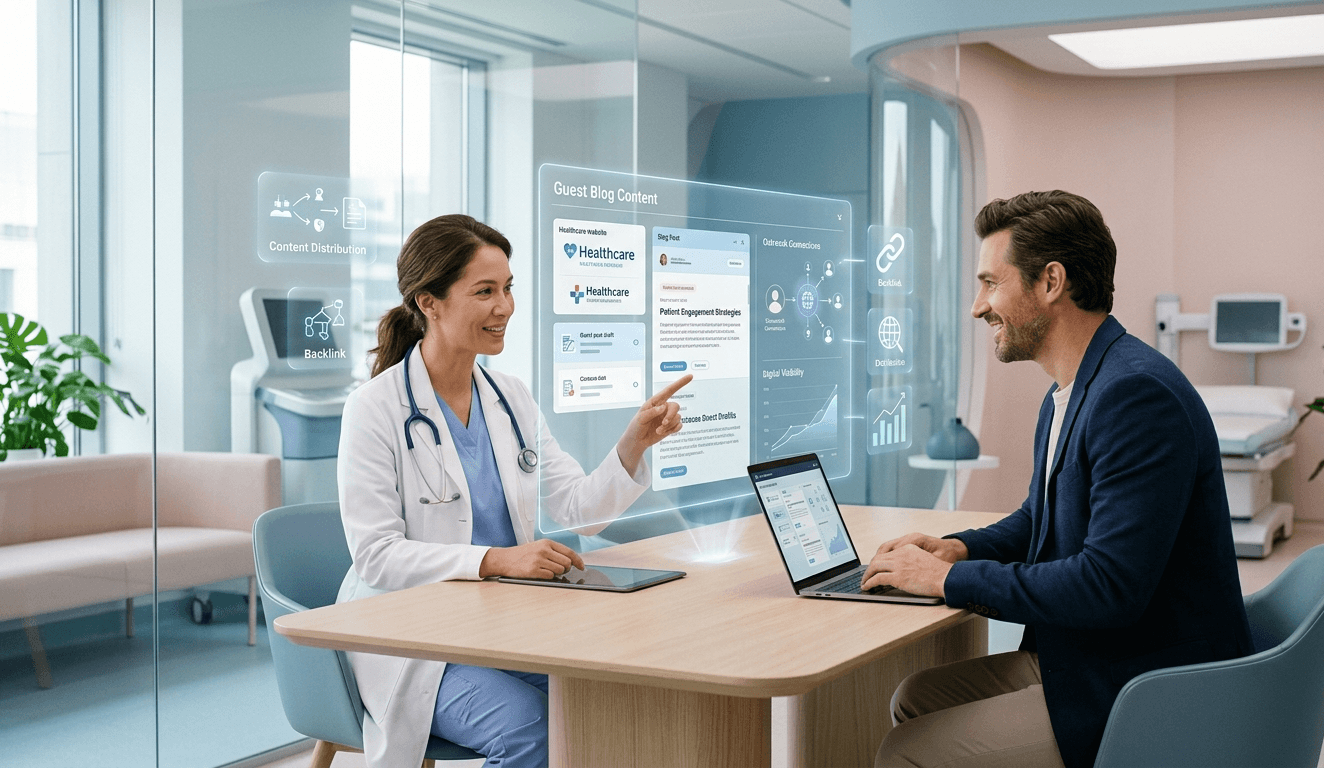

“Stop guessing which ads work. Use Medical Call Tracking Software to close the attribution gap, track ROI, and ensure HIPAA compliance.”
You spend a lot of money on marketing. You pay for Google Ads. You pay for SEO. You might even have a few billboards or radio spots running. At the end of the month, your office manager tells you that the phone is ringing. You see new patients in the waiting room. Everything looks fine on the surface. However, a major problem exists under the hood. You have no idea which of those marketing channels actually brought those patients in.
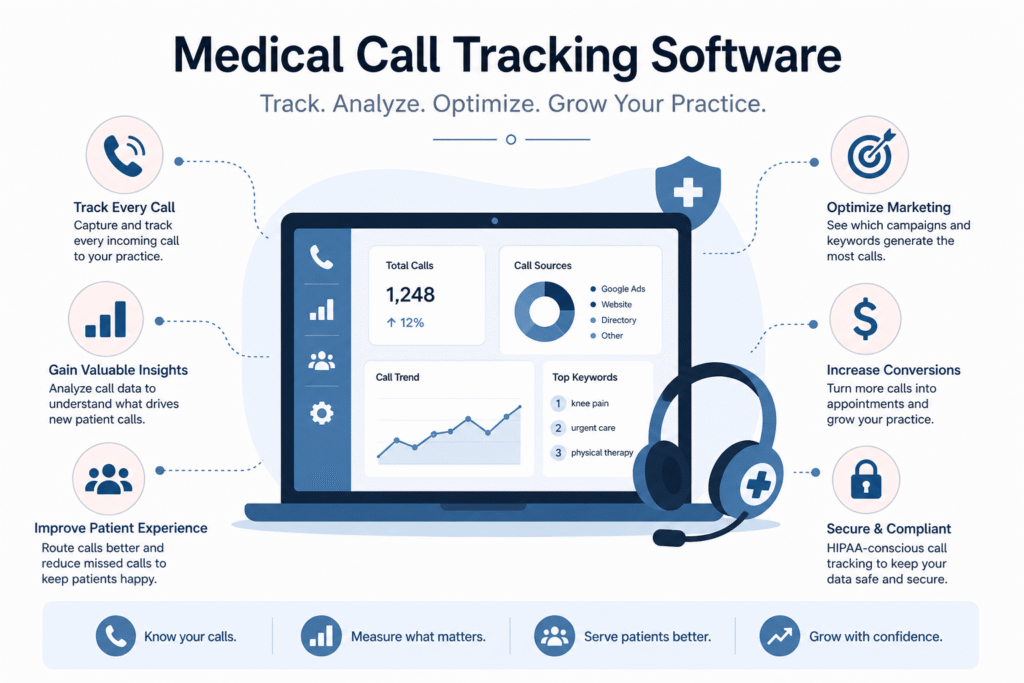
This lack of clarity is the “attribution gap.” It is the most common way medical practices lose money. Without precise data, you are essentially gambling with your marketing budget. You are throwing money at a wall and hoping some of it sticks. This is where medical call tracking software becomes your most valuable tool. It bridges the gap between a click and a consultation. It tells you exactly where your money goes and what it brings back.
In this guide, we will explore why marketing attribution is the backbone of a successful clinic. We will look at technical features like Dynamic Number Insertion (DNI). We will also discuss why HIPAA-compliant call recording is a non-negotiable requirement for staff training and legal safety. Finally, we will show you how InvigoMedia can take this complex data and turn it into a clear roadmap for growth.
What is Healthcare Marketing Attribution?
Marketing attribution is the process of identifying which touchpoints lead to a conversion. In the medical world, a “conversion” is usually a phone call or a booked appointment. Most patients do not just see one ad and book immediately. They might see a Facebook post on Monday. They might search for your specialty on Google on Wednesday. Then, they might click a Google Ad on Friday and finally call the office.
If you only look at the final step, you might give all the credit to the Google Ad. But the Facebook post started the process. Proper attribution tracks this entire path. Without it, you might stop paying for Facebook because it “doesn’t work,” only to find that your Google Ad leads dry up too.
Attribution solves the mystery of the patient journey. It gives credit to the right sources. It allows you to see the “big picture” of your marketing spend. When you understand attribution, you stop guessing. You start making decisions based on cold, hard facts.
The Financial Danger of Marketing Blind Spots
Running a medical practice without call tracking is like driving a car with a blacked-out windshield. You can feel the car moving, but you don’t know where you are going. You don’t know if you are about to hit a wall.
Many doctors rely on the front desk to ask, “How did you hear about us?” This is a recipe for disaster. Patients often forget. They might say “the internet.” Does that mean Google? Does it mean your website? Does it mean a review site like Yelp? Furthermore, the front desk is busy. They often forget to ask, or they write down vague answers just to finish the intake form.
This “I don’t know” tax is expensive. If you spend $5,000 a month on various ads and $2,500 of that produces zero patients, you are wasting $30,000 a year. You could use that money to hire another nurse, upgrade your equipment, or simply increase your profit. Medical call tracking software identifies the “dead weight” in your budget. It allows you to cut the losers and double down on the winners.
How Medical Call Tracking Software Works
You might wonder how a piece of software can know so much about a phone call. The process is actually quite elegant. When a visitor lands on your website, the software recognizes them. It assigns them a unique, temporary phone number. This is the core of the system.
When the patient dials that number, the system routes the call to your actual office line. In the background, the software logs everything. It records the keyword the patient searched for. It notes the landing page they landed on. It even tracks how long they spent on your site before calling.
This happens in milliseconds. The patient has no idea they are calling a tracking number. To them, the experience is seamless. To you, the experience is a goldmine of data. You get a notification or a report showing that “Patient X” called from a specific Google PPC campaign. This is lead source identification at its finest.
Dynamic Number Insertion: The Secret Sauce
Dynamic Number Insertion (DNI) is the most important feature of medical call tracking software. In the old days, you had to use static numbers. You would put one number on a billboard and another on a flyer. This worked for traditional media, but it failed for the web.
DNI changes the game. It uses a “pool” of numbers. When someone clicks your Google Ad, they see Number A. When someone finds you through organic search, they see Number B. Because these numbers are dynamic, the software can track specific user sessions.
This is vital for healthcare PPC tracking. Google Ads can be very expensive. If you are paying $20 per click for keywords like “knee surgeon near me,” you need to know if those clicks turn into calls. DNI provides that link. It allows your marketing team to optimize your ads. They can see which specific words make the phone ring. They can stop bidding on words that eat your budget without providing patients.
Patient Lead Tracking from Click to Consult
A phone call is a great start, but it isn’t the end. A “lead” is only valuable if it becomes a “patient.” Medical call tracking software helps you follow the lead through the entire funnel.
Advanced systems integrate with your CRM or Patient Management Software. This means you can see that a call from a specific Facebook ad eventually resulted in a $10,000 surgical procedure. This is the ultimate goal: marketing ROI measurement.
Instead of just counting calls, you are counting dollars. You can calculate your exact cost per acquisition (CPA). If you know that it costs you $150 in marketing to get one new patient, and that patient is worth $1,000, you have a winning formula. You can confidently spend more money because you know you will get a return. Without tracking, you are just hoping the math works out.
The Necessity of HIPAA-Compliant Call Recording
In the medical field, privacy is everything. You cannot use standard business call tracking tools. Most of them are not built for healthcare. They do not follow the strict rules of the Health Insurance Portability and Accountability Act (HIPAA).
If you record a call where a patient mentions their symptoms, their name, or their birthdate, that is Protected Health Information (PHI). If that recording is stored on an insecure server, you violate the law. The fines for HIPAA violations are massive. They can reach tens of thousands of dollars per incident.
Medical call tracking software must be HIPAA-compliant. This means several things. First, the company must sign a Business Associate Agreement (BAA) with you. This is a legal contract that says they take responsibility for protecting your data. Second, the data must be encrypted. Both while it is being sent and while it is sitting on a server. Third, access must be restricted. Only authorized staff should be able to listen to recordings.
InvigoMedia prioritizes this security. We ensure that every piece of data is locked down. You get all the benefits of call tracking without any of the legal risks.
Front Desk Training Tools: Improving Your “First Impression”
Your marketing might be perfect. Your ads might be brilliant. But if your front desk staff is rude or unorganized, you will lose the patient. The phone call is the first human interaction a patient has with your practice. It is the “make or break” moment.
HIPAA-compliant call recording is a powerful tool for front desk training. It acts like “game film” for an athlete. You can listen to calls and hear exactly how your staff handles inquiries.
Do they answer the phone quickly? Do they sound empathetic? Do they ask for the appointment? Do they know how to handle price objections?
Often, doctors find that they are losing 30% of their leads because the front desk isn’t following a script. Or perhaps they are letting calls go to voicemail during lunch hours. Call analytics for clinics reveal these patterns. You can use the recordings to coach your team. You can play a “perfect” call as an example. You can identify which staff members need more help. This turns your front desk into a high-conversion sales team.
Call Analytics for Clinics: Beyond the Basics
Basic call tracking tells you who called and when. Advanced call analytics tell you why they called and how it went. Modern software uses Artificial Intelligence to “read” the call. It can detect the sentiment of the caller. Was the patient happy, frustrated, or confused?
The software can also look for specific keywords in the conversation. It can automatically tag a call as a “New Patient Inquiry” or a “Billing Question.” This saves you hours of manual work. You can look at a dashboard and see that 40% of your calls from Google Ads are about a specific service, like LASIK or Botox.
This data helps you improve medical marketing efficiency. If everyone is calling about Botox, but your website focuses on skin cancer checks, you have a disconnect. You can update your website to match what patients actually want. You are letting the patients tell you how to market to them.
Maximizing Marketing ROI Measurement
Every dollar you spend should have a job. If you spend money on a billboard, its job is to get people to call. If it doesn’t do that job, you should fire it. But you can’t fire it if you don’t know it’s failing.
Call tracking allows for precise marketing ROI measurement. You can compare different channels side-by-side. You might find that your SEO leads are cheaper than your PPC leads. However, you might also find that PPC leads book appointments faster.
This information allows you to balance your budget. You can invest in SEO for long-term growth and PPC for immediate patient flow. You can see which geographic areas produce the most calls. Maybe patients from the north side of town are your best customers. You can then direct your ads specifically to those zip codes. This level of precision is only possible with dedicated tracking software.
Lead Source Identification: Solving the Mystery
In a multi-channel world, lead source identification is a puzzle. A patient might see your ad on a bus. Later, they search your name on their phone. Then, they go home and look at your website on their laptop.
Traditional tracking gets confused by this. It might think the patient is three different people. Medical call tracking software uses “cross-device” tracking to connect the dots. It understands that the person on the phone is the same person who saw the bus ad and visited the site twice.
This prevents you from making bad decisions. For example, you might think your bus ads aren’t working because no one “mentions” them. But the data might show that people who see the bus ads are much more likely to search for your practice by name later. The bus ad is the “assist” that makes the goal possible. Call tracking reveals these hidden connections.
Why Your Practice is Losing Money Right Now
If you don’t have tracking in place, you are losing money in three ways:
- Wasted Ad Spend: You are paying for ads that don’t produce calls. You just don’t know which ones they are.
- Missed Opportunities: Your front desk might be missing calls or mishandling them. Without recordings, you can’t see the leaks in your bucket.
- Low Lifetime Value: You aren’t focusing on the marketing channels that bring in the “high-value” patients. Some ads bring in people looking for a “quick fix” or a discount. Other ads bring in patients looking for complex, long-term care. You want the latter.
Medical call tracking software fixes all three problems. It acts as a filter. It keeps the good traffic and helps you eliminate the bad. It turns your marketing budget into an investment rather than an expense.
The Role of InvigoMedia in Your Growth
Implementing call tracking can seem overwhelming. There are numbers to set up, scripts to install on your website, and dashboards to monitor. Most doctors don’t have time for this. They need to focus on treating patients.
This is where InvigoMedia comes in. We are not just a software company. We are a full-service medical marketing partner. We specialize in medical call tracking software and advanced attribution. We handle the technical setup from start to finish.
We don’t just give you a login to a dashboard and wish you luck. We analyze the data for you. Our team looks at your call logs every week. We identify which ads are performing. We flag calls where your front desk might have missed an opportunity. We provide clear, easy-to-read reports that show your exact ROI.
With InvigoMedia, every marketing dollar is accounted for. We make sure your budget is working as hard as you are. We use precise tracking to ensure you are only spending money on what actually grows your practice.
Enhancing Medical Marketing Efficiency
Efficiency is about getting more for less. In a competitive healthcare market, you cannot afford to be inefficient. Your competitors are likely already using some form of tracking. If they know their CPA and you don’t, they have a massive advantage. They can outbid you for the best keywords because they know exactly how much a patient is worth.
Medical marketing efficiency means your ads get smarter over time. Google’s algorithms love data. When you feed call tracking data back into Google Ads, the system learns. It starts showing your ads to people who are more likely to pick up the phone. This lowers your costs and increases your lead quality. It is a virtuous cycle. The more you track, the better your marketing becomes.
Training Your Front Desk to Be Patient Advocates
We often view the front desk as “administrative.” In reality, they are your sales team. They are the gatekeepers. If they aren’t trained properly, they can unintentionally push patients away.
By using call analytics for clinics, you can transform the culture of your office. You can move from a “transactional” mindset to a “relational” one. When you listen to recordings, you can identify moments where a staff member showed great empathy. You can reward that behavior.
You can also identify common questions that patients ask. If everyone is calling to ask about your parking situation, you should put that information prominently on your website. This reduces “junk” calls and frees up your staff to handle high-value patient inquiries. This is how you use data to create a better experience for everyone.
The Future of Medical Call Tracking
The technology is only getting better. We are moving toward a world of “predictive analytics.” Soon, the software won’t just tell you what happened. It will tell you what is likely to happen. It will suggest budget changes before you even ask.
However, the core principles remain the same. You need to know who is calling and why. You need to protect their privacy. You need to use that information to improve your service. Medical call tracking software is no longer a “luxury” for large hospitals. It is a necessity for every private practice and clinic that wants to stay in business.
Conclusion: Take Control of Your Marketing Dollars
The era of “guessing” in medical marketing is over. You no longer have to wonder if your Google Ads are working or if your SEO is worth the investment. Medical call tracking software provides the clarity you need to run a profitable, efficient practice.
By implementing Dynamic Number Insertion, you gain a deep understanding of the patient journey. By using HIPAA-compliant call recording, you protect your practice and train your staff to be the best they can be. You stop losing leads and start building a loyal patient base.
Marketing attribution isn’t just a technical term. It is the key to your growth. It allows you to spend your budget with confidence. It ensures that every dollar you invest is actually helping people find the care they need.
InvigoMedia is ready to help you solve the attribution puzzle. We provide the advanced analytics, the technical expertise, and the healthcare-specific knowledge to take your practice to the next level. We make sure that every call is tracked, every lead is identified, and every marketing dollar is accounted for.
Don’t let your marketing budget disappear into a black hole. Reveal the truth behind your numbers. Reach out to InvigoMedia today and let us help you implement the medical call tracking software your practice deserves. It is time to stop guessing and start growing.
Frequently Asked Questions (FAQs)
What is the difference between a tracking number and my regular number?
A tracking number looks exactly like a regular local or toll-free number. However, it is routed through a software platform before reaching your phone. This allows the software to capture data about the caller and their digital journey. Your regular number remains your primary line for existing patients and general business.
Will using DNI hurt my SEO?
No. In fact, when implemented correctly, it has no negative impact on your search engine rankings. Modern DNI scripts are designed to be “crawler-friendly.” They ensure that search engines like Google still see your consistent Name, Address, and Phone Number (NAP) information, which is vital for local SEO.
Is call tracking hard to set up on my website?
If you do it alone, it can be tricky. You have to place a snippet of code on your site. However, if you work with a partner like InvigoMedia, we handle the entire process. It usually takes less than an hour to get everything running perfectly.
Can I track calls from offline sources like mailers or billboards?
Yes. You simply assign a “static” tracking number to those specific pieces of media. When someone calls that number, the system knows they are calling from your March postcard or your highway billboard. This allows you to compare offline and online marketing in one dashboard.
What happens if I stop using the software? Do I lose the numbers?
The numbers belong to the tracking account. If you cancel the service, those specific tracking numbers will eventually be released. This is why we always recommend keeping your primary business number on your business cards and letterhead, while using tracking numbers for your active marketing campaigns.
How does call tracking help with Google Ads “Smart Bidding”?
Google’s AI needs conversion data to work. If you don’t track calls, Google only sees clicks. It doesn’t know which clicks were “good.” When you integrate call tracking, you tell Google, “This click resulted in a 10-minute phone call.” Google then finds more people like that caller. This makes your ads significantly more effective.
Is call recording mandatory?
No, it is optional. You can track the source of a call without recording the audio. However, we highly recommend recording for training purposes. As long as the system is HIPAA-compliant and you follow state laws regarding “one-party” or “two-party” consent, it is a very safe and effective tool.
How do I know if a call tracking provider is truly HIPAA-compliant?
Ask them if they will sign a Business Associate Agreement (BAA). If they hesitate or say “we don’t need one,” walk away. They must also offer features like encrypted storage, automatic deletion options, and secure access logs. InvigoMedia provides all of these protections.
Can I see which specific keywords led to a phone call?
Yes. With session-level DNI, you can see the exact search term the patient typed into Google before they landed on your site and called. This is the “holy grail” of keyword research. You can stop guessing what patients are searching for and start knowing.
How much does medical call tracking software cost?
The cost varies based on the number of tracking numbers you need and the minutes you use. However, the cost is usually a tiny fraction of your marketing budget. Most practices find that the software pays for itself within the first month by identifying wasted ad spend.
Does the software work with my existing phone system?
Yes. Medical call tracking is “system agnostic.” It doesn’t matter if you use a traditional landline, a VoIP system, or a mobile phone. The software simply “forwards” the call to your existing number. You don’t need to buy any new hardware.
Can I track “missed calls”?
Yes. This is one of the most useful features. The system logs every call, even if no one answers. You can set up email or SMS alerts to notify you immediately when a call is missed. This allows your staff to call the patient back right away, preventing them from calling your competitor instead.
What is “Sentiment Analysis” in call tracking?
This is an AI-powered feature that analyzes the tone of the conversation. It looks for “angry” or “happy” keywords and detects the caller’s mood. It can flag “unhappy” calls for you to review, allowing you to perform “service recovery” before a patient leaves a negative review.
How long should I keep call recordings?
This depends on your internal policy and state regulations. Some practices keep them for 30 days for training, while others keep them longer for legal protection. A HIPAA-compliant system allows you to set custom retention periods to suit your needs.
Will the patient hear a recording saying the call is tracked?
You can choose to include a “whisper” or a “disclaimer.” In many states, you must notify the caller that the call is being recorded for quality assurance. This is a standard practice that most patients are used to hearing when calling any professional office.